 Send us an e-mail








You cannot find the code
The correct access route depends on whether the person verified through GOV.UK One Login or an authorised agent.













 9.30 am – 6.00 pm GMT
 Monday-Friday
 info@coddan.co.uk








£40.00+VATIdentityGuard Pro™ Recommended for 1
package
Buy Now IdentityGuard Pro™ – Standard Verification Where the Individual Has Not Yet Obtained a Personal Code for £40 + VAT. The fixed £40 + VAT price covers standard ACSP verification; it does not cover locating, retrieving, replacing or repeatedly using an existing code unless separately agreed and operationally available. The code belongs to the individual and the same code is normally reused for relevant LLP member, PSC and company roles. Before ordering, review where the code must be provided. If a new check genuinely requires priority Coddan handling, compare RapidVerify Pro™. For broader orientation, return to the LLP identity-verification entrance. Use this package for a required identity check—not merely for another use of an existing code. |
£65.00+VATRapidVerify Pro™ Recommended for 2
package
Buy Now RapidVerify Pro™ – Priority Verification Where a Required Personal Code Has Not Yet Been Issued for £65 + VAT. The fixed £65 + VAT price covers priority ACSP verification only. It does not connect the code with every role, complete a member or PSC submission, retrieve a lost code or correct an inaccurate LLP record. If verification is not urgent, compare IdentityGuard Pro™. If the code exists but does not connect, review the LLP identity-problem diagnostic service and provide the non-sensitive information listed under what information to provide. Priority for the outstanding identity check, not a promise of immediate role connection. |
£125.00+VATVerifyFlex Solutions™ Recommended for 3
package
Buy Now VerifyFlex Solutions™ – Flexible Verification Before Personal Code Issue for £125 + VAT. The fixed £125 + VAT price includes the agreed evidence-route assessment, guidance and supported verification. Companies House controls code issue and availability. If the existing problem is simply code access, reuse or separate role submission, do not purchase another verification package automatically; start with the role-use explanation. If the evidence itself requires enhanced support, compare the FlexiVerify Option™. Changes to membership or PSC capacity are dealt with separately through the LLP change service. Flexible evidence support before the code exists, without duplicating completed verification. |
£220.00+VATFlexiVerify Option™ Recommended for 4
package
Buy Now FlexiVerify Option™ – Enhanced Evidence Support Where Verification Has Not Completed and No Personal Code Is Available for £220 + VAT. The fixed £220 + VAT price covers enhanced verification work, not the correction of an LLP filing or resolution of a disputed role. If route flexibility is adequate without intensive handling, compare VerifyFlex Solutions™. Where verification succeeded but the code is missing, compromised, sent to an incorrect email address or rejected during role connection, use the diagnostic and corrective-route page before buying another check. Enhanced help with the verification barrier, while code and record problems follow their own routes. |
LLP identity verification
Completing identity verification is not always the last step. The individual may still need to provide their Companies House Personal Code through the correct LLP member or PSC process so that the verified identity is connected to the right LLP and role.
Verification, code issue, code access, code use and role connection are different stages. None of them, by itself, admits a member, designates a member, creates PSC status or completes the underlying LLP event.
This page may help where an individual has completed verification but does not know what happens next, where the code belongs, or how it is used for an LLP member or individual PSC role.
The correct access route depends on whether the person verified through GOV.UK One Login or an authorised agent.
Incorporation, admission of a new member, an existing member’s confirmation statement and the PSC process use the code differently.
The same individual may be a member, designated member and PSC, or may hold affected roles across several LLPs and companies.
The code, date of birth, verification details, LLP record or selected role process may not match.
Companies House gives or makes available an 11-character Personal Code after an individual successfully completes identity verification. It is the individual’s code—not a code belonging to the LLP.
The code belongs to the verified natural person. It does not belong to the LLP, Coddan or another filing agent.
One person normally keeps the same code for relevant LLP and company roles rather than receiving a new one for each entity.
It is not the LLP authentication code, registration number, Unique Taxpayer Reference or another partnership credential.
Possessing the code does not authorise a person to file for the LLP, make an LLP decision or act for the individual generally.
A corporate member or RLE does not receive an individual Personal Code. Any natural person connected with that entity must be assessed through the person’s own current capacity, such as individual LLP member or individual PSC.
“Connecting the verified identity to the role” means that Companies House uses the code and matching personal details to associate the verified person with the relevant registered or proposed LLP capacity. It is not a separate legal office or a substitute for the LLP event.
Receiving the code does not mean that it has been used. Saving it to a Companies House account does not connect it automatically to every LLP or role.
The access route depends on how identity verification was completed.
Free official route
Sign in to Companies House using the same email address used for verification and open “Manage account” to view the code.
Companies House says it also sends the code by email where verification was completed after 8 July 2026. After a successful Post Office route, the code can be viewed through the Companies House account.
Supported route
Companies House sends the Personal Code to the email address supplied for the individual by the ACSP. The ACSP does not create or issue the code.
The individual may save the code to a Companies House account using the email address to which the code was sent, together with the code and date of birth.
If the ACSP supplied an incorrect email address, contact that ACSP. It may need to contact Companies House.
Coddan cannot promise to retrieve, regenerate or change a code independently. Companies House controls code delivery, replacement and cancellation.
The correct process depends on the individual’s LLP role and the event. A convenient filing channel must not be used as a substitute for identifying the real event.
| Individual and event | Where the code is used | What the code does not complete |
|---|---|---|
| Proposed individual member | The correct code and required identity statement are dealt with through the LLP incorporation process for that proposed member. | It does not incorporate the LLP, create the membership agreement or secure registration. |
| New individual member | The code and confirmation are supplied through the applicable individual-member appointment process. | It does not admit the person, prove consent or validate the effective date. |
| Existing individual member | The code is provided through the applicable LLP confirmation-statement process during the transition. | It does not replace the confirmation statement’s own statutory work or update unrelated information. |
| Individual PSC | The code is provided separately through the current PSC identity-verification process within the period applying to that person. | It does not establish the PSC condition, nature of control or correctness of the PSC record. |
| Individual designated member | The person uses the member process. Designation alone does not require a second Personal Code or a third role connection. | It does not make or end the designation or perform the designated member’s wider responsibilities. |
Identity Verification Before and During LLP Incorporation
The individual normally uses the same Companies House Personal Code, but must provide it separately through the process applying to each capacity. The role-specific timing may also differ.
Use the code through the incorporation, appointment or confirmation-statement process that applies to the individual’s membership.
Provide the same code separately through the applicable PSC process within the individual’s own compliance period.
One identity check does not mean one combined role step.
Providing the code for the member capacity does not automatically complete the PSC requirement. Providing it as a PSC does not complete the member requirement. Designated-member status does not add another identity check merely because the person is designated.
Identity verification is personal to the individual. The code can normally be reused, but every affected LLP and role must still be dealt with through its own applicable process.
The individual normally completes identity verification once rather than repeating it for every LLP.
The same Personal Code is normally used for relevant LLP and company roles held by that person.
Each affected LLP, company and member, director or PSC role still needs its own applicable code-use step.
One successful connection does not admit a member or update another LLP, company or role automatically.
Repeated code use is not automatically repeated identity verification, and it does not automatically justify another paid verification service.
The Personal Code belongs to a natural person and is used for an affected individual Companies House role. It is not issued because somebody has a general association with the LLP.
The entity does not receive an individual Personal Code. Corporate-member identity-verification requirements remain future under current Companies House guidance.
A registrable relevant legal entity is reported through the PSC regime where applicable, but it is not treated as an individual code holder.
A person does not use a code merely because they are an officer or owner behind a corporate member. A separate current individual-member or individual-PSC role must be established.
Identity Verification for LLPs with Corporate Members, RLEs and Individual Controllers
The following position was checked on 20 September 2026. The relevant role and date should be checked again before a code is used.
Current
Codes are currently used for proposed individual members at incorporation, newly admitted individual members, existing individual members through the applicable confirmation-statement process, and individual PSCs through their separate PSC process.
Transitional
Mandatory identity verification began on 18 November 2025. Existing members and PSCs follow the timing applying to their circumstances.
18 November 2026 is not one universal deadline for every member, PSC or LLP.
Future
Requirements for corporate LLP members, officers of corporate PSCs and people filing at Companies House are announced for later introduction and must not be treated as currently operational.
An individual who became a PSC after 18 November 2025 may provide the code when first added to the register or within the applicable 14-day period after being added.
For an existing PSC, the applicable 14-day period depends on whether the person is also a member of the same LLP. The dates should be checked for that individual rather than inferred from a general deadline.
An eligible individual may complete identity verification through the free official Companies House route. Professional ACSP assistance is not compulsory, and Coddan does not charge for the individual’s use of the official route.
The person verifies through the available official service, then receives or accesses the Personal Code through the current official process.
The individual may still ask Coddan to undertake separately agreed incorporation, appointment, PSC, confirmation-statement or LLP support work. Using the free verification route does not prevent that.
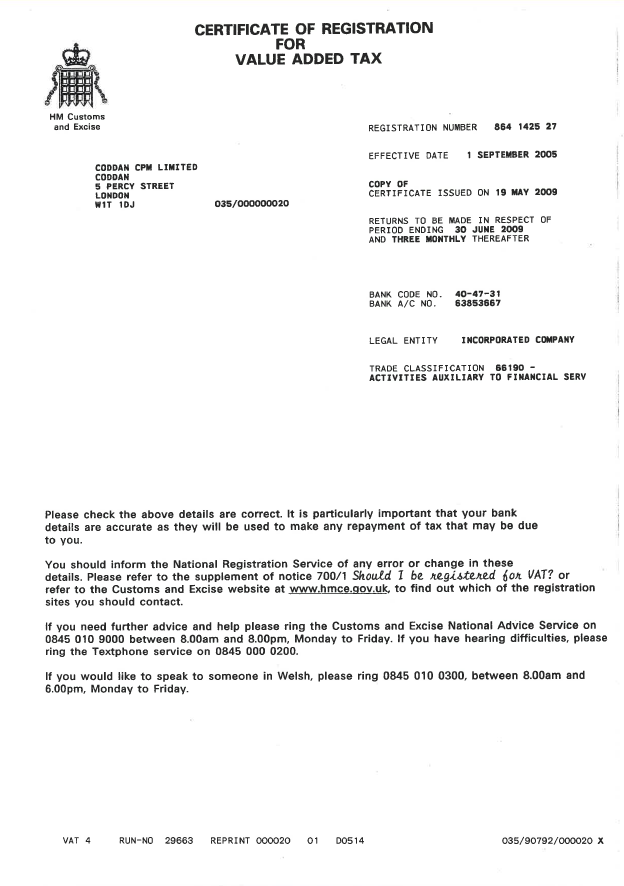
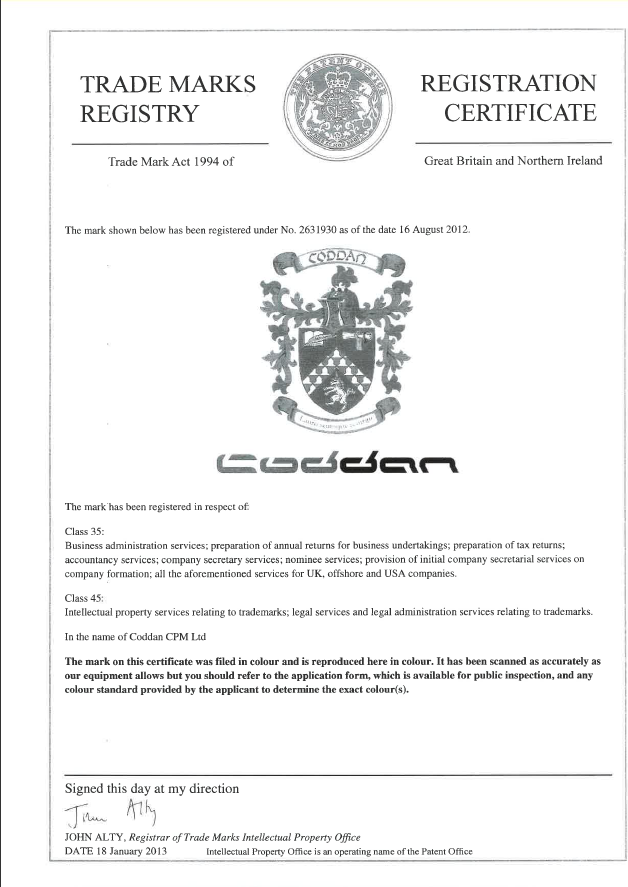
Coddan CPM Limited is registered with Companies House as an Authorised Corporate Service Provider, also known as a Companies House authorised agent, and is supervised by HMRC for anti-money-laundering purposes.
Confirm the individual, LLP, affected capacity and whether the matter concerns incorporation, appointment, an existing membership or PSC process.
Establish how the person verified, which email address was used and whether the code was received or can be accessed.
Identify each LLP and capacity for which the same individual code must be provided separately.
Where Coddan is authorised and appropriately instructed, use a supplied code through an agreed incorporation or filing process within the confirmed scope.
Compare the code-use context, name, date of birth, email address, LLP and role information before selecting another route.
Identify where Companies House action, a record correction, an LLP filing or professional advice may be required.
Coddan does not create or issue the code, control Companies House emails, use a code without authority, validate the underlying role or guarantee filing acceptance.
This page concerns Personal Codes rather than the full verification service. Where Coddan’s supported route is selected and confirmed, the stages remain separately identifiable.
Coddan’s client onboarding, anti-money-laundering checks, the technology result, Coddan’s evidence review, the ACSP submission, Companies House code issue, code use and the LLP event remain separate stages.
The code may be shared with a person properly authorised to make the relevant filing, but it should not be published or treated as a general LLP credential.
You may provide the code to an authorised accountant, formation agent, company secretary or other filer for a specific agreed filing.
Do not include the actual code in an ordinary website enquiry, public message or document intended for general circulation.
Contact Companies House. Its current guidance says it can send a replacement code by email and cancel the previous code.
A failed connection does not always mean that identity verification must be repeated. The next step depends on where the difference appears.
Check the characters and confirm that the code belongs to the named individual rather than another member or PSC.
Companies House says an incorrect date of birth on its records may need to be corrected before the verified identity can be connected.
Contact the ACSP that verified the individual. It may need to update information it supplied to Companies House.
A member code step cannot be treated as the PSC step, or vice versa, merely because the same person and code are involved.
An incorrect appointment, PSC record or personal detail may require its own filing or corrective route. The code cannot repair it.
A disputed membership, appointment, control position or filing authority may require governance or legal review rather than another verification attempt.
A Personal Code does not correct the Companies House register. Repeating verification does not necessarily resolve a record difference, and successful code use does not validate an unauthorised or inaccurate LLP event.
The process starts with the person and LLP event—not with entering a code into the first available filing.
01
Confirm the individual, the relevant LLP and the incorporation, appointment, existing membership or PSC event.
02
Establish whether the person is an individual member, designated member, individual PSC or holds several capacities.
03
Identify how verification was completed and whether the code was received, saved or can be accessed.
04
Compare the name, date of birth, LLP, role and relevant event information before the code is used.
05
Use the code separately through each applicable member or PSC process with the individual’s authority.
06
Continue with the valid incorporation, admission, confirmation statement, PSC process or appropriate corrective route.
Provide what is available. “Not known” is an acceptable answer. You do not need to diagnose the filing or correction route before Coddan reviews the matter.
Proposed or registered name, registration number and whether the matter concerns incorporation, appointment, existing membership, PSC status or a confirmation statement.
Full name, date of birth, residential address and the email address used during identity verification.
Whether the person is a member, designated member, individual PSC or holds several roles, including every affected LLP or company.
Whether the person used GOV.UK One Login, a Post Office route, Coddan or another ACSP, and the outcome.
Whether the code was received by email, can be seen in the Companies House account or has been saved there. Do not provide the code itself.
Incorporation, admission, confirmation-statement and PSC dates, including any period displayed by Companies House.
The wording of any error and any apparent difference in the name, date of birth, email address, LLP or role.
Whether Coddan or another authorised person will make the related filing and what authority has been given.
Whether the code may have been shared or compromised, without reproducing the code in the enquiry.
Do not place your Personal Code in a general website enquiry.
This section does not transmit an enquiry. Use Coddan’s normal contact details so that the appropriate secure route can be confirmed.
Identity verification, receipt of a code and connection to a role do not by themselves:
Where one of these matters is the real problem, a separate LLP formation, post-formation, PSC, governance, confirmation-statement, correction, restoration or legal service may be required.
Completes their personal verification step, provides accurate details, keeps the code safe and authorises appropriate use.
Establish valid membership and control events, keep appropriate evidence, provide accurate instructions and complete LLP filing obligations.
Performs only the verification, review, coordination or filing work it is authorised and engaged to undertake.
Controls its verification services, Personal Codes, role connection, filing acceptance and the public register.
The scope may depend on whether verification is complete, how it was completed, whether the code was received or can be accessed, the number of affected LLPs and roles, whether the individual is a member and PSC, and whether incorporation, appointment, PSC or confirmation-statement work is required.
It may also depend on name, date-of-birth, email or record differences, whether corrective work is needed, Coddan’s professional charge, Value Added Tax, applicable official charges and separately agreed filing, governance or legal work. No code-delivery time, filing time or acceptance outcome is guaranteed.
Code reuse is not automatically a new verification service. The official verification route remains free where suitable, Companies House does not make it chargeable merely because the code is used for several roles, and related LLP filings are included only where expressly agreed.
Continue with the destination that matches the underlying decision. Code use remains separate from role classification, incorporation, member or PSC changes and corrective work.
It is the 11-character code Companies House gives or makes available to an individual after successful identity verification. It is personal to that individual.
Companies House. Coddan or another ACSP may conduct and submit supported verification, but the ACSP and its technology provider do not create or issue the code.
After GOV.UK One Login verification, check “Manage account” using the same email address; Companies House also emails codes for verifications completed after 8 July 2026. After ACSP verification, Companies House sends it to the email supplied by the ACSP.
No. The Personal Code belongs to a verified individual. The LLP authentication code is a separate filing credential belonging to the LLP.
Normally, no. The individual reuses the same Personal Code, but must supply it through the applicable process for every affected LLP and role.
No. You normally use the same code, but provide it separately for the member capacity and the PSC capacity.
Not merely because the designation changes. An individual designated member verifies as an LLP member. The designation and its additional responsibilities remain separate.
The correct Personal Code and required identity statement for each proposed individual member are dealt with through the LLP incorporation process. The code does not itself incorporate the LLP.
Through the applicable individual-member appointment process. The person’s valid admission and the LLP’s filing obligations remain separate.
Through the applicable LLP confirmation-statement process during the transition. A person connected with several LLPs must deal with each LLP separately.
The PSC has an applicable 14-day period. Its timing depends on whether the PSC was registered before 18 November 2025, whether the person is also a member of the same LLP, or whether the person became a PSC after commencement.
No individual Personal Code is issued to the legal entity. A natural person connected with it must be assessed through any separate current individual-member or individual-PSC capacity.
Where Coddan is authorised to make the relevant filing and the code is supplied through an agreed secure process, Coddan may use it for that filing. Do not send it through a general enquiry.
Companies House guidance permits sharing with someone filing on your behalf. Limit access to a properly authorised filer and the specific agreed filing.
Check the Companies House account and relevant email according to the route used. If an ACSP verified you, contact it to confirm the email address supplied.
Check that the correct code was entered for the correct person. An incorrect date of birth or ACSP-supplied detail may need to be corrected before the identity can be connected.
Contact Companies House. Its current guidance says it can send a new code by email and cancel the previous code.
No. Admission depends on the LLP agreement or agreement with the existing members and the real underlying event. The code confirms completed identity verification for the role process.
No. PSC status arises from the applicable ownership or control conditions. Verification and code use do not decide whether those conditions are met.
No. An inaccurate member, PSC or personal-detail record requires the appropriate filing, correction or official route.
Provide the LLP, individual, capacities, relevant dates, verification route, code-access position and any error or mismatch. Do not include the actual Personal Code in a general enquiry.
The number of LLPs and roles, code access, matching information, any record difference and the incorporation, filing or corrective work requested all matter. Code reuse alone is not automatically another verification purchase.
Tell Coddan which LLP, individual, role and event are involved and how verification was completed. We can help identify the correct code-use process and the LLP work that still remains separate.
Contact Coddan


Coddan CPM LTD™ Business One-Stop Shop since 2005 Doing Business Made Easier!
