 Send us an e-mail








1. PSC status
Ownership or control conditions determine whether the individual is a PSC. Identity verification does not make that decision.













 9.30 am – 6.00 pm GMT
 Monday-Friday
 info@coddan.co.uk








£40.00+VATIdentityGuard Pro™ Recommended for 1
package
Buy Now IdentityGuard Pro™ – Standard Verification Where an Individual PSC Has Not Yet Obtained a Personal Code for £40 + VAT. The fixed £40 + VAT price covers standard ACSP verification within the supported evidence scope. The code belongs to the individual and the same code is normally reused for applicable director, LLP member and PSC roles. Before ordering, review one person, one code and separate roles. If a genuinely outstanding identity check requires priority handling, compare RapidVerify Pro™. Use this package for a required identity check—not merely for another use of an existing code. |
£65.00+VATRapidVerify Pro™ Recommended for 2
package
Buy Now RapidVerify Pro™ – Priority Verification Where a Required PSC Personal Code Has Not Yet Been Issued for £65 + VAT. The fixed £65 + VAT price covers priority ACSP verification only. It does not connect the code with every role, complete a PSC submission, retrieve a lost code, request an extension or correct inaccurate entity information. If verification is not urgent, compare IdentityGuard Pro™. If the code exists but does not connect, review what happens when the code does not connect and the PSC diagnostic service. Priority for the outstanding identity check, not a promise of immediate code or role connection. |
£125.00+VATVerifyFlex Solutions™ Recommended for 3
package
Buy Now VerifyFlex Solutions™ – Flexible Verification Before PSC Personal Code Issue for £125 + VAT. The fixed £125 + VAT price includes the agreed evidence-route assessment, guidance and supported verification. Companies House controls code issue and availability. If the existing problem is simply code access, reuse, timing or separate role submission, do not purchase another verification package automatically; start with the Personal Code explanation. If the evidence itself requires enhanced support, compare the FlexiVerify Option™. Flexible evidence support before the code exists, without duplicating completed verification. |
£220.00+VATFlexiVerify Option™ Recommended for 4
package
Buy Now FlexiVerify Option™ – Enhanced Evidence Support Where PSC Verification Has Not Completed and No Personal Code Is Available for £220 + VAT. The fixed £220 + VAT price covers enhanced verification work, not correction of a PSC filing or resolution of disputed control. If route flexibility is adequate without intensive handling, compare VerifyFlex Solutions™. Where verification succeeded but the code is missing, compromised, unavailable or rejected during role connection, use the diagnostic and corrective-route page before buying another check. Enhanced help with the verification barrier, while code, timing and record problems follow their own routes. |
PSC identity verification and role connection
After an individual PSC completes identity verification, the next question is when and how their Personal Code must be provided for the PSC role — and what separate action is required if the same person is also a company director or LLP member.
Coddan can help identify the person, each affected entity and role, the applicable PSC period and any separate role connection. Verification, code issue, code use, PSC status and the entity’s notification remain different steps.
See what happens after verificationThe steps are connected, but none should be treated as a substitute for another.
Ownership or control conditions determine whether the individual is a PSC. Identity verification does not make that decision.
The individual proves their identity through the suitable free Companies House route or an ACSP route.
Companies House provides the Personal Code after successful identity verification. Coddan and its provider do not issue it.
The individual receives or accesses the code through the route applying to their verification and should keep it securely.
The code and the required identity-verification statement are supplied through the applicable PSC process.
Companies House uses the details to associate the verified individual with the relevant PSC record.
Director and LLP-member connections are completed separately, even when the same code is used.
The company or LLP separately identifies, confirms and reports its PSC information and maintains supporting records.
It is an 11-character code given to an individual after successful Companies House identity verification. It is personal to that individual, not to a company, LLP, agent or adviser.
The same individual normally uses the same code for relevant PSC, director and LLP-member roles and across relevant companies and LLPs. The code may still have to be supplied several times because each affected entity and role has its own process.
The route used for identity verification affects where the individual first finds the code.
An individual who verified using GOV.UK One Login can sign in to Companies House using the same email address and view the code under account management. Companies House states that people verified after 8 July 2026 were also sent the code by email.
The free official route remains available where the person and evidence meet its current requirements. Professional ACSP support is not compulsory.
Companies House sends the code to the email address supplied for the individual by the ACSP. If it does not arrive, the individual should first ask the ACSP to check that address and correct submitted information where necessary.
The individual may save the code to a Companies House account created with the email address to which the code was sent, following the current official process.
Do not place your Personal Code in a general website enquiry.
There is no single group deadline. The correct period depends on when the person became registered as a PSC and whether they hold another affected role in the same entity. The live Companies House record or service should be checked for the individual dates.
The code may be provided when the person is first added to the Companies House register or within 14 days after being added. The entity’s PSC notification and the individual’s verification-details step are separate.
The director code is provided through the applicable confirmation-statement process. The PSC code is provided through the PSC verification-details service during the 14-day period beginning the day after the company’s confirmation-statement date. Filing early does not move that PSC period.
LLP-member and PSC code uses remain separate. The current equivalent-role process links timing to the LLP’s applicable confirmation-statement cycle, but the individual’s live Companies House period should be checked before action because published guidance is less explicit than for a company director.
The applicable period is the first 14 days of the person’s birth month. Another PSC role or entity may produce a different period for the same individual.
Each role must be completed separately. The same code is normally reused, but the periods may differ and completion for one company or LLP does not complete another.
18 November 2026 must not be treated as a universal deadline for every PSC. Registration dates, confirmation-statement dates, roles and birth months can produce different periods.
The current PSC verification-details service allows a request for a further 14 days. The request must be made before the existing deadline has passed.
An extension does not remove the requirement, change PSC status, complete another role or provide an indefinite postponement. Availability and the live deadline should be checked in the official service.
The ordinary online PSC verification-details service cannot be used where the PSC has protected personal information or is awaiting the outcome of a protection application. Protection applies from the application date.
The individual should use the applicable protected-information or Companies House route. Coddan will not invent or assume an alternative online procedure.
The PSC may provide the verification details, or another person may do so on the PSC’s behalf through the current official process. An authorised agent should use the code only for the specific authorised Companies House purpose.
Sharing the code does not transfer identity, PSC status, filing authority or general control over the individual’s Companies House account.
A failed connection is a symptom, not a diagnosis. Repeating identity verification is not automatically the correct solution.
The code may be mistyped or belong to another individual.
The registered date of birth, name or other information may differ from the verified details.
The code may be used for the wrong entity or role, or the PSC-specific submission may remain incomplete.
The PSC entry may be missing or inaccurate, or an ACSP may have supplied incorrect verification information.
Locating a code, replacing a compromised code, correcting ACSP-supplied information, correcting registered details and resolving disputed PSC status are different routes. A Personal Code does not correct or validate the register.
The individual normally retains one code, but every applicable role connection must be completed through its own process.
| Capacity | What the code step does | What remains separate |
|---|---|---|
| Director and PSC | The same code is provided separately for both roles. | Director appointment, PSC status, role timings and entity filings. |
| LLP member and PSC | The same code is used through the member and PSC processes. | Admission, membership, control and their applicable filings. |
| Designated member and PSC | Designation alone does not create another Personal Code. | Designation responsibilities and PSC status. |
| Several entities | The code is reused for every applicable connection. | Each role, period, notification and underlying event. |
Ending one role does not automatically end another. A director’s resignation or an LLP member’s cessation does not by itself end PSC status, and ceasing to be a PSC does not by itself end a directorship or LLP membership.
The proposed ownership and control position must first be established. The individual’s identity-verification and Personal Code position can then be coordinated, and the PSC particulars supplied through the applicable formation process.
This supports accurate formation work, but incorporation is a separate company event controlled by the registrar. The full incorporation application, company structure, subscribers, articles, capital or guarantee arrangements, registered office and director appointments remain within the formation service.
Current-position wording checked on 20 September 2026.
Living individual PSC verification, Personal Code issue, PSC-specific use, separate director and LLP-member use, current 14-day periods, extension requests, the protected-PSC boundary, free Companies House verification and ACSP verification are operational.
Mandatory identity verification began on 18 November 2025. Existing PSC timing depends on the individual, role, registration date, confirmation-statement date and birth month. There is no universal deadline for everyone.
Later requirements announced for officers of corporate PSCs, people filing for entities, corporate directors and corporate LLP members must not be presented or sold as current operational procedures.
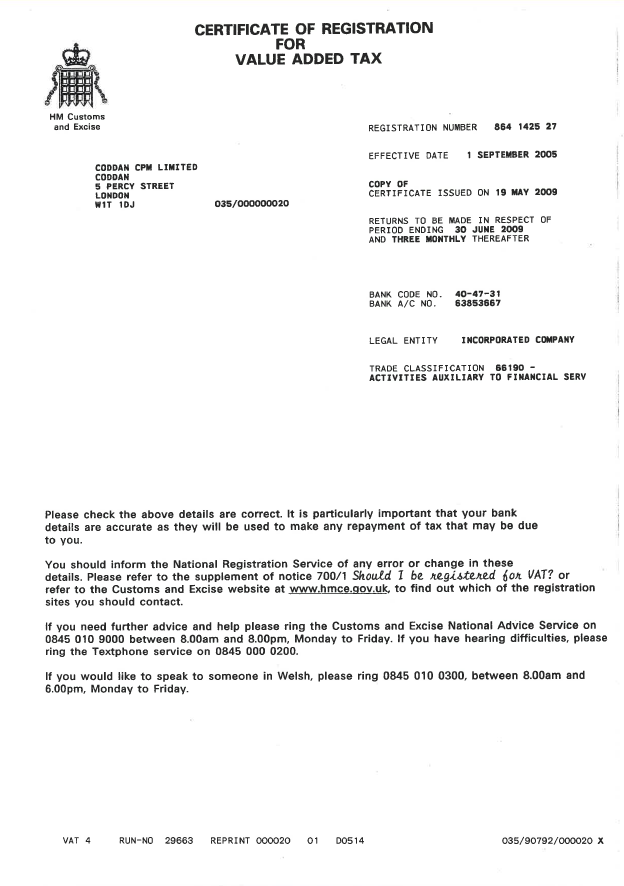
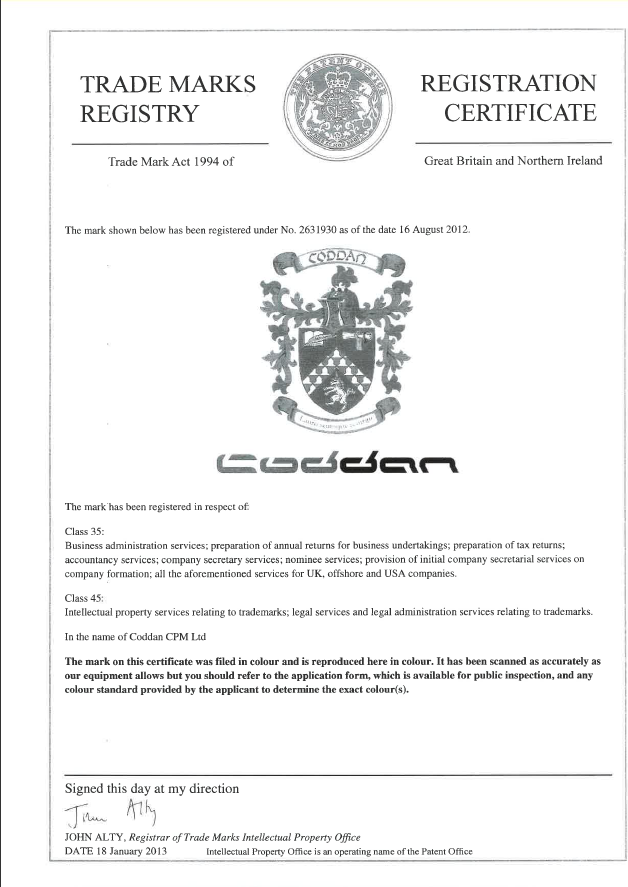
Coddan CPM Limited is registered with Companies House as an Authorised Corporate Service Provider and is supervised by HMRC for anti-money-laundering purposes. Client onboarding and anti-money-laundering checks remain separate from Companies House identity verification.
“Not known” is an acceptable answer. This section does not transmit an enquiry. Use Coddan’s normal website contact details and do not send the actual Personal Code or unredacted identity evidence in a general enquiry.
Full name, date of birth, residential country and address, verification email, route used and whether an ACSP was involved.
Whether the code was received or can be viewed in a Companies House account. Do not provide the code itself.
Every relevant company or LLP name and number, each PSC role and any director, member or designated-member capacity.
When the person became or was registered as a PSC, relevant confirmation-statement dates, birth month and the displayed or expected PSC period.
Role connections already completed, any extension request, authorised agent and related formation, PSC or confirmation-statement work.
Any protection application or status, mismatch, Companies House message, corrective work or disagreement already under way.
The scope may depend on whether verification is complete, whether the code is available, the number of entities and roles, applicable periods, extension availability, protected information, record differences and whether another verification attempt is genuinely required.
Coddan’s professional charge, VAT, applicable official charges and separately agreed formation, filing, confirmation-statement, PSC-analysis, governance, corrective or legal work may also be relevant. The free Companies House route remains available where suitable. Code reuse is not automatically another verification charge, and related entity work is included only where expressly agreed.
It does not create or end PSC status.
It does not determine ownership, control or a nature of control.
It does not create or end a directorship or LLP membership.
It does not create or remove designated-member status.
It does not complete incorporation or the entity’s PSC notification automatically.
It does not correct information or validate an earlier filing.
It does not authorise every filing or replace supporting records.
It does not complete tax, charity or other regulator requirements or guarantee acceptance.
It is an 11-character code supplied to an individual after successful Companies House identity verification. It links the verified identity to applicable Companies House roles when used through the correct process.
No. The Personal Code belongs to the verified individual. A company authentication code is a different credential used for company filing access.
Normally no. The same individual reuses the same Personal Code, but must supply it separately for each applicable entity and role.
Yes. One PSC connection does not connect the person to every other company or LLP.
It depends on when you were registered and whether you hold another affected role in the same entity. Check the dates shown by Companies House rather than assuming a group or universal deadline.
Use the same code separately: through the applicable confirmation-statement process for the director role and through the PSC verification-details process for the PSC role.
The same code is normally used, but the member and PSC connections remain separate. Check the individual live period and applicable LLP process.
For an existing PSC who is also a director of the same company, Companies House states that early filing does not move the PSC’s 14-day period.
The code may be provided when you are first added to the register or within 14 days after being added.
The current official PSC service allows a request for a further 14 days, but it must be made before the existing deadline expires.
The official service allows another person to provide verification details on a PSC’s behalf. They should be properly authorised and use the code only for that purpose.
The ordinary online service cannot be used if personal information is protected or a protection application is pending. Use the applicable protected-information or Companies House route.
If you used GOV.UK One Login, sign in to Companies House with the same email and check account management. If an ACSP verified you, Companies House sends the code to the email the ACSP supplied.
Ask the ACSP that verified you to check the email submitted and contact Companies House where correction is required. Coddan cannot independently alter a code or Companies House record.
Check the code, person, date of birth, entity, role and underlying PSC entry. The correct route may be a code correction, ACSP update, record correction or specialist review — not repeated verification.
Contact Companies House using its current procedure. Companies House can replace the code by email and cancel the previous code.
No. PSC status comes from the applicable ownership or control conditions. Code use connects a verified identity with a record; it does not determine control.
Coddan may help identify the correct official route, but it cannot independently retrieve, replace, cancel or regenerate a Companies House Personal Code.
Yes, where agreed. Coddan may prepare a person-and-role schedule, identify separate periods and coordinate supported steps without treating one completion as satisfying every role.
Provide the person, entities, roles, dates, verification route, code-access position and any Companies House message. “Not known” is acceptable. Do not place the code in a general enquiry.
Coddan can review the verification route, code-access position, PSC period and separate director or LLP-member connections, then identify the work that can safely be coordinated within the agreed scope.
Contact Coddan


Coddan CPM LTD™ Business One-Stop Shop since 2005 Doing Business Made Easier!
