 Send us an e-mail








A new CLG is being prepared
You are preparing to form a CLG and need to organise the proposed directors, members or guarantors and any PSC information before submission.













 9.30 am – 6.00 pm GMT
 Monday-Friday
 info@coddan.co.uk








£40.00+VATIdentityGuard Pro™ Recommended for 1
package
Buy Now IdentityGuard Pro™ – Standard formation-stage identity verification for £40 + VAT. Coddan reviews the result and supporting evidence and, where satisfied and authorised to proceed, manually submits the required identity-verification information through its Companies House ACSP account. Companies House—not Coddan—issues the Personal Code to the individual. The £40 + VAT price is Coddan’s professional charge for the agreed standard verification service; an eligible individual may instead use the free official Companies House route. Verification, issue of the code, use of the code for the proposed role and incorporation are separate stages. Each proposed director’s code must be ready for the application, while an individual PSC’s code is dealt with through the applicable PSC process. The distinction is explained under verification, the Personal Code and the role. If Coddan’s handling is time-sensitive, compare RapidVerify Pro™. |
£65.00+VATRapidVerify Pro™ Recommended for 2
package
Buy Now RapidVerify Pro™ – Priority formation-stage identity verification for £65 + VAT. Where the supported route applies and no further enquiry is required, Coddan targets its review and ACSP submission within one business day. This is a |
£125.00+VATVerifyFlex Solutions™ Recommended for 3
package
Buy Now VerifyFlex Solutions™ – Flexible formation-stage evidence and route assessment for £125 + VAT. The £125 + VAT price covers the agreed assessment, document guidance and supported verification work within the confirmed evidence scope. Further evidence may be required before Coddan can decide whether it is satisfied and authorised to submit the verification information. |
£220.00+VATFlexiVerify Option™ Recommended for 4
package
Buy Now FlexiVerify Option™ – Individually managed complex-evidence support for £220 + VAT. The £220 + VAT price reflects the enhanced individual work included within the agreed complex-evidence scope. If Coddan becomes satisfied that the applicable standard has been met and is authorised to proceed, it manually submits the required verification information through its ACSP account; Companies House separately controls issue of the Personal Code. This package does not resolve an uncertain PSC position, validate a proposed appointment, prepare the CLG constitution or incorporate the company. If no acceptable verification route can be confirmed, the proposed formation may need to pause while the person, evidence or company arrangements are reconsidered. Read what formation-stage identity verification does not do and use the Personal Codes and role-connection service for the later code step. If flexible evidence assessment is required without the highest level of support, compare VerifyFlex Solutions™. |
Identity verification in CLG formation
Forming a Company Limited by Guarantee now requires identity-verification planning as well as the usual company information. Coddan can identify who needs to verify, coordinate the supported route and make sure the Personal Code is used at the correct stage of the formation work.
Verification is one part of formation. It does not create the CLG. Companies House examines the completed application, decides whether it can be registered and incorporates the company only when registration takes place.
Use this service when a new CLG is being prepared and you need to coordinate identity verification with the incorporation application. It focuses on the point at which the people, their roles and their Personal Codes must be ready.
You are preparing to form a CLG and need to organise the proposed directors, members or guarantors and any PSC information before submission.
A founder may be a director, member or guarantor and PSC. The same person may verify once, but each affected role must be dealt with correctly.
You need to know whether to use the free Companies House service or Coddan’s supported ACSP route and what formation work remains afterwards.
For structural suitability, the company name, the guarantee, objects, articles, registered-office arrangements and formation packages, use Company Limited by Guarantee Formation.
List every person and every proposed capacity before arranging verification. A capacity that affects the incorporation application is not automatically a capacity that creates an individual identity-verification requirement.
Each proposed director must have completed identity verification and provide their Personal Code for the new-company application.
An individual who will be a PSC must be identified and dealt with under the applicable PSC verification and code-use process. A director who is also a PSC has two distinct roles.
A person does not automatically have the same current Companies House verification requirement merely because they are a guarantor or ordinary member. Check whether they are also a director or PSC.
Where a legal entity or another non-individual arrangement may be registrable, its status and control information must be assessed separately. A body corporate does not complete an individual selfie or liveness check.
If the PSC position is incomplete or uncertain, do not guess. The application must contain the PSC information or statutory statement appropriate to the actual circumstances, and further ownership or control analysis may be required before submission.
For a new company, the registration application must include the Personal Code for each proposed director. Individual PSCs are also within the mandatory framework and must provide their code through the process and period applying to the PSC role. If one person is both director and PSC, the same Personal Code is used but must be provided separately for each role.
Mandatory identity verification began on 18 November 2025, with transitional arrangements for existing directors and PSCs. A new CLG application follows the current new-company requirements; 18 November 2026 must not be treated as one deadline for every person or role.
Companies House lists later requirements for people filing on behalf of companies, corporate directors and officers of corporate PSCs. These must not be treated as operational formation procedures until the relevant commencement and current guidance have been confirmed.
Official position checked: 19 September 2026.
Individuals who can use the official service may verify directly without buying Coddan’s supported service. Review the free Companies House route.
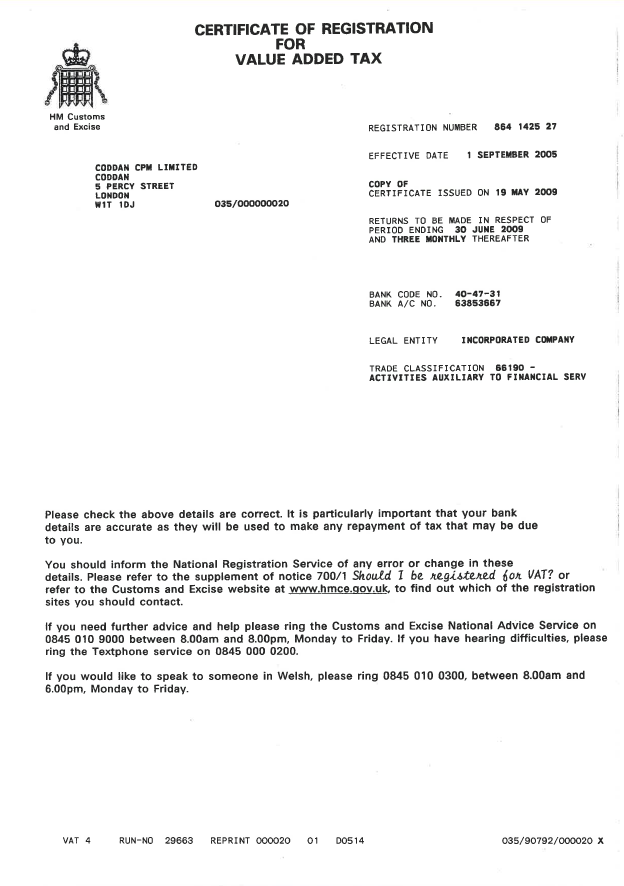
Coddan CPM Limited is registered with Companies House as an Authorised Corporate Service Provider, also known as a Companies House authorised agent, and is supervised by HMRC for anti-money-laundering purposes.
Coddan is not Companies House. Our secure provider’s result does not itself complete the Companies House process. ACSP registration does not imply official endorsement, guarantee incorporation or remove the possibility of further evidence, delay or rejection.
Coddan’s client onboarding and anti-money-laundering checks are related to, but distinct from, Companies House identity verification.
The individual completes the free Companies House route or an agreed ACSP check.
Companies House issues one Personal Code to the individual. It belongs to the person, not to the proposed CLG.
The code for every proposed director is supplied through the new-company application.
Where the person is also an individual PSC, the same code is provided separately through the process applying to that PSC role.
Protect the code. Do not place an actual Personal Code in a general enquiry, ordinary email or information card. Coddan will identify the correct secure process when the agreed work reaches that stage.
The proposed name, people, guarantee, PSC position, registered office, constitution and application information are prepared.
Affected individuals complete the appropriate verification route and receive their Personal Codes.
The completed application is submitted. Companies House examines the information and decides whether it can be registered.
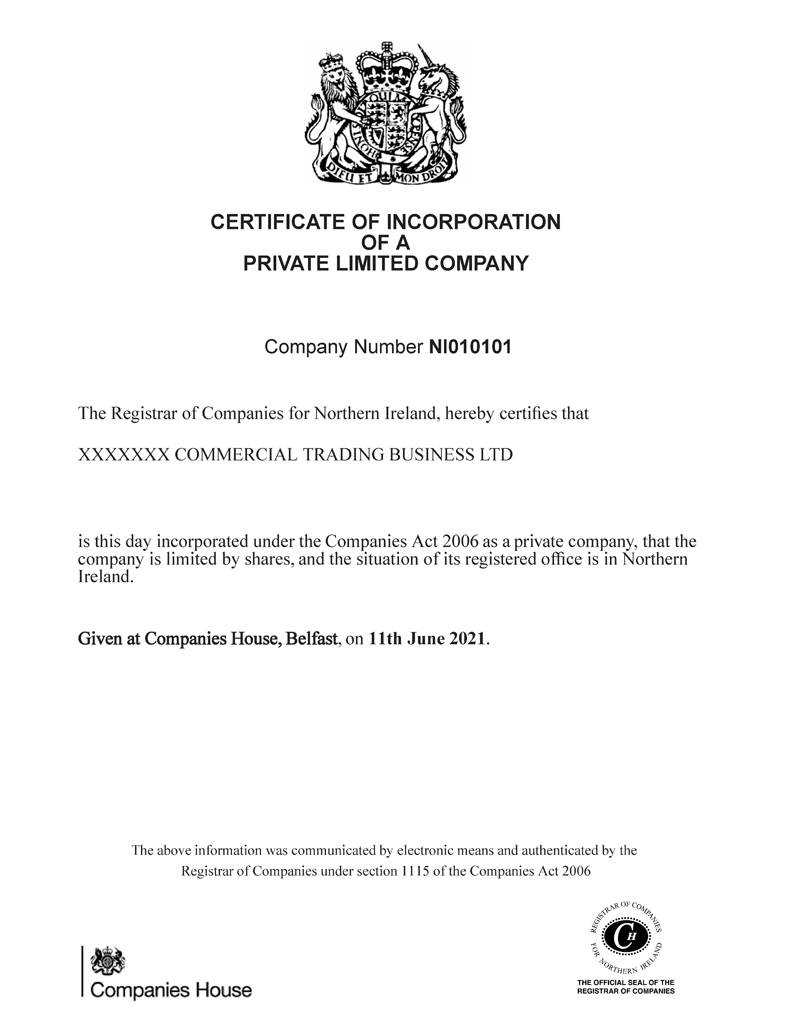
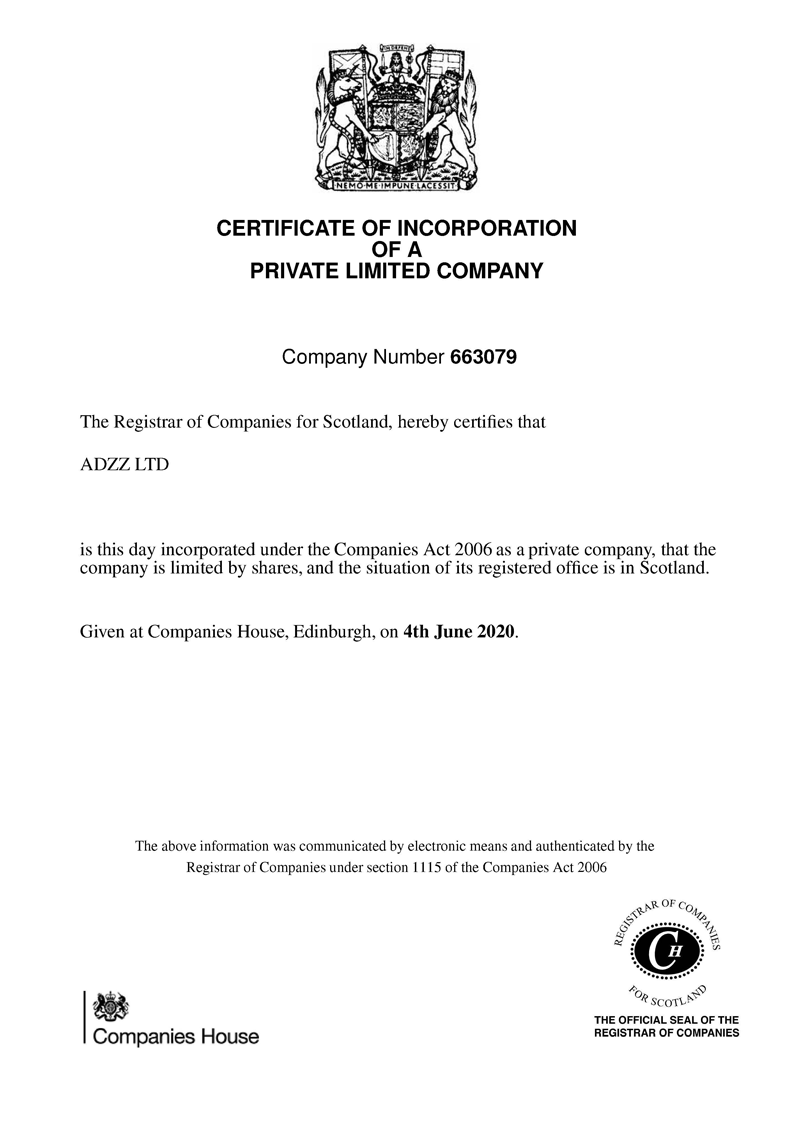
The company is incorporated when the registrar registers it. The certificate of incorporation confirms that the CLG legally exists.
Role connection, first decisions, company records, tax, charity or other regulatory work may still be required after incorporation.
Completing Coddan’s order process, passing an identity check, receiving a Personal Code or supplying that code does not by itself form, register or incorporate the CLG. Nor does incorporation complete every continuing governance or regulatory responsibility.
Provide what you know. “Not known” is an acceptable answer and allows Coddan to identify what still needs to be established. Do not send an actual Personal Code through a general website enquiry.
Proposed name, jurisdiction, intended activities, registered-office arrangements and the reason the CLG is being formed.
Every proposed director, member or guarantor, the guaranteed amount, each known or potential PSC, and all capacities held by the same person.
Required name, date of birth, address, email address and telephone number for each person using the supported route.
Supported identity document, proof of address, issuing country and details of any missing, expired or inconsistent evidence.
Country of residence, overseas documents and any practical timing, language or address-evidence issue already known.
Relevant formation timing and any Charity Commission, CIC, property-management, funding or other regulatory context.
When you are ready, contact Coddan using our normal website contact details. Please do not send sensitive identity documents in a general enquiry.
The Personal Code is used for the appropriate role-related step, and the incorporation application is completed with the required company information. Passing verification does not mean that Companies House has accepted the application.
If the company is registered, the certificate of incorporation confirms its legal existence. Separate work may still be required for PSC role connection, first decisions, registers, HMRC, the Charity Commission, the CIC Regulator or another competent authority.
Identity verification does not choose the legal structure, approve the proposed name, create a directorship, membership, guarantee or PSC status, correct inaccurate information, prove that an appointment was authorised or decide a disputed control question.
It also does not replace the incorporation application or complete tax, charity, CIC, property-management or other regulatory requirements. Those matters remain with the appropriate formation, governance, filing, correction, legal or official process.
Each person must provide genuine information and evidence, complete their own check and protect their Personal Code.
Within the agreed scope, Coddan reviews the formation, coordinates the supported verification, reviews the result, makes the authorised ACSP submission and prepares or submits agreed formation work.
Companies House controls its verification service, Personal Codes, examination, register, registration and incorporation. HMRC, the Charity Commission, the CIC Regulator and other bodies control their own processes.
The free Companies House route is available where the individual can use it and does not require Coddan’s supported service. Any Coddan charge depends on the agreed work; no price, official fee or completion time is assumed on this page.
Each proposed director must have completed identity verification and provide their Personal Code in the new-company registration application. Verification remains separate from the registrar’s examination and decision.
Not merely because the person is a guarantor or ordinary member. The person must be considered separately if they will also be a director, individual PSC or hold another capacity affected by a current requirement.
The capacities remain distinct. The individual normally verifies once and uses the same Personal Code, but the code must be provided through the process for the director role and separately for the PSC role.
Companies House issues the code after it accepts completion of the identity-verification process. Where an ACSP verifies the person, Companies House sends the code to the email address supplied through that process.
The code for each proposed director is included through the new-company application. A person who is also an individual PSC provides the same code separately through the process applying to that PSC role.
No. Verification addresses the individual’s identity. Companies House still examines the incorporation application and controls acceptance, registration and incorporation.
Yes, where the supported ACSP route and formation service are confirmed within the agreed scope. Coddan coordinates its work, but Companies House controls the official verification result, Personal Code and incorporation decision.
Overseas residence does not by itself prevent verification or appointment. The available route depends on the person’s identity document, proof of address, country and any exceptional evidence issue.
Do not submit on the assumption that verification will be resolved later. The evidence and available route should be reviewed, and any mismatch or exceptional case addressed before the person is included as a proposed director.
No. Companies House incorporation, HMRC matters and Charity Commission or CIC Regulator processes are separate. The applicable later work depends on the organisation’s status and activities.
The company may need role-connection work, first decisions, company and membership records, accounting and tax arrangements, confirmation statements and any separate charity or regulatory action. These are not completed merely by incorporation.
Provide the proposed company and formation details, every person and capacity, known PSC information, relevant contact details, identity and address evidence, overseas circumstances and timing. “Not known” is acceptable; do not send an actual Personal Code through a general enquiry.
Tell Coddan about the proposed CLG, its directors, members or guarantors and known PSCs. We can identify the verification work, confirm the appropriate route and coordinate it with the agreed formation service.
Discuss CLG formation verification


Coddan CPM LTD™ Business One-Stop Shop since 2005 Doing Business Made Easier!
