 Send us an e-mail








A real business
At least two genuine participants intend the LLP to hold, manage or exploit assets through a lawful profit-seeking activity.













 9.30 am – 6.00 pm GMT
 Monday-Friday
 info@coddan.co.uk








£189.00+VATLLPStartup Essential™ Recommended for 1
package
Buy Now LLP Registration – LLP as a Holding and Ownership Entity for £89 + VAT. The fixed £89 + VAT price is Coddan’s professional fee for the scope stated above and VAT is added to that fee. Companies House fees are separate: £100 standard software, £156 same-day or £124 paper; paper also requires separately agreed Coddan work. The price assumes two straightforward UK individual members; each additional UK individual is £35 + VAT, each accepted UK body-corporate member is £125 + VAT, and later admissions are separate. This is a one-off service with no automatic renewal. Incorporation does not transfer property, securities, intellectual property, contracts, goodwill or beneficial ownership to the LLP. Need initial records? Compare Registration & Initial Records. Review the full formation terms and compare LLP and company structures. Overseas or complex cases use international LLP formation. LLP Registration and Registration & Initial Records may proceed only for a settled eligible case. Governance Setup and First-Year Administration require a questionnaire and human acceptance. Companies House—not Coddan—decides whether the incorporation or later filing is accepted. |
£249.00+VATLLP Startup Records™ Recommended for 2
package
Buy Now Registration & Initial Records – LLP as a Holding and Ownership Entity for £149 + VAT. The fixed £149 + VAT price is Coddan’s professional fee for the scope stated above and VAT is added to that fee. Companies House fees are separate: £100 standard software, £156 same-day or £124 paper; paper also requires separately agreed Coddan work. The price assumes two straightforward UK individual members; each additional UK individual is £35 + VAT, each accepted UK body-corporate member is £125 + VAT, and later admissions are separate. This is a one-off service with no automatic renewal. Incorporation does not transfer property, securities, intellectual property, contracts, goodwill or beneficial ownership to the LLP. Need formation only? Compare LLP Registration. Need governance? Compare Governance Setup. Review the full formation terms and see later member and PSC changes. Overseas or complex cases use international LLP formation. LLP Registration and Registration & Initial Records may proceed only for a settled eligible case. Governance Setup and First-Year Administration require a questionnaire and human acceptance. Companies House—not Coddan—decides whether the incorporation or later filing is accepted. |
£379.00+VATLLP Governance Essential™ Recommended for 3
package
Buy Now Governance Setup – LLP as a Holding and Ownership Entity for £279 + VAT. The fixed £279 + VAT price is Coddan’s professional fee for the scope stated above and VAT is added to that fee. Companies House fees are separate: £100 standard software, £156 same-day or £124 paper; paper also requires separately agreed Coddan work. The price assumes two straightforward UK individual members; each additional UK individual is £35 + VAT, each accepted UK body-corporate member is £125 + VAT, and later admissions are separate. This is a one-off service with no automatic renewal. Assignments, licences, conveyances, security documents, trust arrangements, valuations and bespoke ownership provisions remain separate. Need no agreement? Compare Registration & Initial Records. Need first-year support? Compare First-Year Administration. Review the full formation terms and read about LLP governance. Overseas or complex cases use international LLP formation. LLP Registration and Registration & Initial Records may proceed only for a settled eligible case. Governance Setup and First-Year Administration require a questionnaire and human acceptance. Companies House—not Coddan—decides whether the incorporation or later filing is accepted. |
£549.00+VATLLP First-Year Essential™ Recommended for 4
package
Buy Now First-Year Administration – LLP as a Holding and Ownership Entity for £449 + VAT. The fixed £449 + VAT price is Coddan’s professional fee for the scope stated above and VAT is added to that fee. Companies House fees are separate: £100 standard software, £156 same-day or £124 paper; paper also requires separately agreed Coddan work. The £50 digital confirmation-statement fee is separate. The price assumes two straightforward UK individual members; each additional UK individual is £35 + VAT, each accepted UK body-corporate member is £125 + VAT, and later admissions are separate. The scope ends with the first confirmation statement; later administration requires affirmative renewal. Asset administration, accounts, tax, valuation, investment regulation and later ownership changes remain separately scoped. Need no first-year support? Compare Governance Setup. Review the full formation terms and review LLP accounts and continuing compliance. Overseas or complex cases use international LLP formation. LLP Registration and Registration & Initial Records may proceed only for a settled eligible case. Governance Setup and First-Year Administration require a questionnaire and human acceptance. Companies House—not Coddan—decides whether the incorporation or later filing is accepted. |
LLP structures for different business purposes
An LLP can hold, manage or commercially exploit assets through a genuine business. Registration alone does not transfer title, establish beneficial ownership, create tax treatment or prove that a passive arrangement is a business carried on with a view to profit.
This page is for people or organisations considering an LLP to own or commercially exploit identified shares, contractual rights, equipment, receivables, intangible assets or other property. It may also help an existing owner organise a settled contribution, assignment, licence, lease or permitted-use arrangement.
At least two genuine participants intend the LLP to hold, manage or exploit assets through a lawful profit-seeking activity.
The current legal and beneficial owners, proposed treatment, restrictions and required consents can be stated.
The case can be classified as an accepted standard formation or as an assessment and written-quotation matter.
Transfers, licences, valuations, tax work, banking and specialist documents remain separate from incorporation.
Correct destination first: property-led cases belong to LLP as a property-holding or property-investment entity, IP-led cases to LLP as an intellectual-property and licensing vehicle, group operating structures to LLP as a UK group operating entity, joint ventures to LLP as a joint-venture entity, and investment or fund activity to the restricted LLP for investment, asset-management or fund-related activity route. Overseas or complex international formations belong to International and non-UK LLP formation.
To incorporate an LLP, at least two persons must be associated for carrying on a lawful business with a view to profit. A registration certificate or an intention to park an asset is not, by itself, a complete organisational plan.
A limited amount of activity is not automatically disqualifying. The facts must nevertheless support a genuine business with a view to profit. HMRC’s current treatment is not automatically transparent where that condition is not met, so passive or unclear cases require assessment and professional advice.
Two or more genuine participants want a separate incorporated organisation to hold and actively administer identified assets in a profit-seeking business. The people or organisations involved, control, economics and authority are settled; title dependencies are known; and specialist work is separately acknowledged.
There is no genuine business, company share or dividend treatment is required, trust or succession objectives dominate, title is disputed, finance or security is unresolved, or the you expects incorporation itself to transfer or protect assets.
Separate legal personality, organisational continuity and member-based governance may be relevant. None guarantees tax efficiency, creditor protection, lender acceptance or superiority over a company, trust, direct ownership or another vehicle.
LLP as a holding and ownership entity explains the holding-purpose distinction. Compare an LLP with a private limited company provides the complete LLP, company and alternative-structure comparison.
| Structure | What it may organise | Important distinction | Main dependency | Destination |
|---|---|---|---|---|
| LLP holding business | A body corporate with members holding or exploiting assets through a business. | Members, not shareholders; payments are not automatically company dividends. | Formation basis, agreement, title, tax and implementation. | LLP as a holding and ownership entity plus UK LLP formation or International and non-UK LLP formation. |
| Limited company | Shares, shareholders and directors. | Company distribution, group and corporation-tax concepts differ. | Company, legal and tax advice. | Compare an LLP with a private limited company comparison. |
| Direct ownership or co-ownership | Asset held by one or more persons directly. | No separate LLP title or LLP governance arises. | Title, agreement, liability and tax. | Compare an LLP with a private limited company and professional advice. |
| Trust or nominee | Separation of legal and beneficial interests. | Specialist duties, disclosure, tax and enforceability arise. | Bespoke legal and tax work. | LLP agreements and governance/solicitor separate route. |
| Property or IP vehicle | Specialist holding, investment or licensing purpose. | Title and transaction rules dominate. | Property or IP professional. | LLP as a property-holding or property-investment entity or LLP as an intellectual-property and licensing vehicle; destinations pending. |
| Investment or fund arrangement | Investment management or pooled capital. | May engage regulated-activity rules. | Regulatory clearance. | LLP for investment, asset-management or fund-related activity restricted route; destination pending. |
An LLP has members rather than shareholders or directors. It must have at least two designated members; if fewer are designated, every member is treated as designated.
A member can be an agent of the LLP in its business. Internal limits, approvals and signing authority must therefore be organised and recorded.
PSC status can arise through rights to surplus assets, voting, management appointments or significant influence or control. Not every member is automatically a PSC.
Current individual-member verification and personal-code rules must be met. Verification does not prove title, authority, beneficial ownership or PSC status.
The complete member, designated-member, corporate-member and PSC explanation belongs to LLP members, designated members, corporate members and PSCs (implementation destination pending). Corporate-member verification is subject to the staged official regime and current filing instructions.
Legal ownership, beneficial ownership, LLP membership, economic entitlement, control, PSC status and tax attribution are separate questions. Companies House does not adjudicate title or beneficial ownership.
| Asset | Ownership question | Possible LLP activity | Separate work | Professional owner |
|---|---|---|---|---|
| Shares or securities | Registered/beneficial owner, restrictions and security. | Hold, administer or dispose within a genuine business. | Transfers, registers, consent, tax and regulation. | Solicitor, tax or regulatory adviser. |
| Land or buildings | Title, beneficial interest and lender rights. | Hold, lease, develop or manage. | Conveyancing, registration, valuation, finance and tax. | LLP as a property-holding or property-investment entity and property professionals. |
| Intellectual property | Validity, title chain and encumbrances. | Own, license or exploit. | Assignment, licence, registration, valuation and tax. | LLP as an intellectual-property and licensing vehicle and IP professionals. |
| Equipment or inventory | Title, finance, lease or retention of title. | Use, lease or sell. | Consent, schedule, finance and accounting. | Legal/accounting adviser. |
| Contracts or receivables | Assignment, novation and counterparty consent. | Perform, collect or exploit. | Assignment/novation, notice and tax. | Solicitor/accountant. |
| Cash, investments or digital assets | Source, ownership, control and regulated character. | Use or exploitation within the business. | Banking, AML, privacy, platform, tax and perimeter checks. | Bank, legal, tax or regulatory adviser. |
| Treatment | What it means | What incorporation does | Evidence | Boundary |
|---|---|---|---|---|
| Transfer/assignment | Ownership or rights move to the LLP. | Nothing by itself. | Executed instrument, consent and registration. | Solicitor/specialist. |
| Contribution | Member provides cash, property or rights on settled terms. | Does not value or transfer it. | Agreement, title, value and accounting evidence. | Legal/tax/accounting. |
| Licence | Permission without transfer of ownership. | Does not create licence terms. | Scope, term, territory, payment and termination. | IP/legal professional. |
| Lease | Possession or use for a term. | Does not grant a lease. | Lease, consent, registration and tax analysis. | Property/legal professional. |
| Permitted use/custody | Use or administration without ownership. | Does not prove permission or beneficial ownership. | Mandate, permission, insurance and perimeter check. | Legal/regulatory adviser. |
For every asset, record the current legal owner, current beneficial owner, title evidence, restrictions/security, proposed LLP interest, consideration or contribution, effective date, consents, registrations and professional owner. A filing must never manufacture missing title.
LLP as a property-holding or property-investment entity and property professionals own title, conveyancing, land registration, leases, planning, lender consent, security, valuation and property tax.
LLP as an intellectual-property and licensing vehicle and IP professionals own validity, chain of title, assignments, licences, registrations, valuation, infringement and enforcement.
LLP for investment, asset-management or fund-related activity remains restricted. Registration is not FCA authorisation and cannot clear investment management, pooled capital or financial-promotion activity.
Pre-emption, consent, security, lender covenants, tax clearance, valuation and registration formalities must be identified before implementation.
If the members do not agree otherwise, statutory defaults can include equal sharing of capital and profits, participation in management, no remuneration merely for acting in the business or management, majority decisions for ordinary matters, unanimity to change the nature of the business, access to records, duties to account for certain benefits and competing-business profits, and no expulsion by majority without express power.
Those defaults may be unsuitable where assets, economics, voting, authority or exit rights are unequal. Registration does not disapply them. A standard agreement may record settled ordinary instructions; LLP agreements and governance and solicitors own negotiated, bespoke, disputed, trust, nominee, succession and enforceability work.
| Question | Standard-scope PASS | Referral indicator | Owner |
|---|---|---|---|
| Ownership | Known and undisputed. | Trust, nominee, dispute or unclear beneficial owner. | LLP agreements and governance/solicitor. |
| Economics/governance | Settled terms fit approved clauses. | Waterfalls, valuation, veto, deadlock or compulsory transfer. | Solicitor/tax/accounting. |
| Assets/documents | No transaction document included. | Property, IP, investment, finance or security instrument. | Specialist professional. |
| Review | All 13 conditions pass. | Any condition unresolved. | Written quotation/referral. |
The request is proportionate to the case. It may cover the business and income model; members and control; asset schedule; present title and beneficial ownership; proposed treatment and date; contributions and economics; restrictions, security, finance and consent; valuations; corporate authority; advice already received; KYC; and submission authority.
| Issue | Evidence | Why | LLP as a holding and ownership entity role | Dependency |
|---|---|---|---|---|
| Business | Purpose, activity and income model. | Formation basis and suitability. | Diagnose and record. | Tax/legal if passive or unclear. |
| Ownership | Title, registers, contracts and beneficial-owner statement. | Prevents unsupported assumptions. | Evidence schedule. | Solicitor/specialist. |
| Control/PSC | Rights, voting, management and ownership chart. | Correct formation particulars. | Route to LLP members, designated members, corporate members and PSCs. | Legal advice if disputed. |
| Asset movement | Treatment, value, consent and date. | Separates formation and implementation. | Dependency schedule. | Legal/tax/property/IP. |
| Overseas/corporate | Registry, capacity, authority and ownership chain. | International and non-UK LLP formation and KYC readiness. | Route to International and non-UK LLP formation. | Foreign-law/documentary. |
The business is genuine; assets and owners are identified; members, control and authority are settled; no transfer is included; specialist dependencies are separately acknowledged; and ordinary UK LLP formation identity, KYC and acceptance controls pass.
Existing assets need transfer; participants are corporate or overseas; ownership is layered; activity may be passive; title or value is disputed; finance/security exists; a tax, group, succession or protection result drives the structure; or professional clearance is needed.
Assessment and written quotation uses assessment and written quotation. There is no invented Phase 2 assessment product, price, credit or checkout. Legal, tax, property, IP, valuation, documentary and other work is separately identified. A assessment-and-quotation you is not forced into a routine package.
Coddan may pause, refer or refuse where the statutory business basis is not established; a false owner, controller, value or purpose is proposed; authority or consent is missing; beneficial ownership is concealed; title is disputed; sanctions or money-laundering concerns arise; evidence is unreliable; regulated activity is uncleared; or the requested tax, protection, group or ownership outcome is unsupported.
Companies House acceptance proves registration of the submitted particulars. It does not validate commercial suitability, title, beneficial ownership, tax treatment, agreement terms or asset implementation.
| Stage | Required organisation | Completion evidence | Owner |
|---|---|---|---|
| Formation | LLP registered with accepted member and PSC particulars. | Certificate and filing outcome. | UK LLP formation/International and non-UK LLP formation. |
| Governance | Agreement, authority and decisions recorded. | Signed documents/resolutions. | LLP agreements and governance/Coddan within accepted scope. |
| Assets | Transfers, assignments, licences, leases or permissions completed. | Executed instruments and updated registers. | Solicitor/property/IP professional. |
| Finance/tax | Banking, consents, opening records, values and registrations. | Provider/adviser records. | Bank, lender, accountant, tax adviser. |
| Operations | Contracts, insurance, permissions and controls active. | Counterparty, insurer or regulator records. | you/professional. |
| Compliance | Accounts, confirmation statement, PSC and change calendar. | Calendar and filing outcomes. | LLP annual accounts/LLP confirmation statements and continuing compliance and relevant Phase 1 owner. |
Purpose-specific placement — UK LLP formation remains the sole guide containing the complete package terms
| UK LLP formation package | Price | LLP as a holding and ownership entity relevance | Acceptance control | Not included |
|---|---|---|---|---|
| LLP Registration | £89 + VAT | Settled straightforward-case formation. | Direct only if UK LLP formation/KYC eligibility passes. | Agreement, transfer and advice. |
| Registration & Initial Records | £149 + VAT | Settled case needing approved initial records. | Direct only if UK LLP formation/KYC eligibility passes. | Asset implementation/professional work. |
| Governance Setup | £279 + VAT | May record settled standard governance. | Questionnaire, all 13 conditions and human acceptance. | Bespoke provisions/transaction documents. |
| First-Year Administration | £449 + VAT | Conditional formation plus defined first-year scope. | Questionnaire, all 13 conditions and human acceptance. | Unlimited work or automatic renewal. |
The standard assumption is two people. An additional straightforward UK individual member is £35 + VAT; an accepted UK body-corporate member supplement is £125 + VAT. Companies House fees are separate: £100 software, £156 same-day software where available, and £124 paper. VAT, identity verification, address services, documents and professional work remain separate. The current digital confirmation-statement fee is £50. Later renewal requires affirmative acceptance; there is no automatic or indefinite renewal.
Review the UK LLP formation formation service and complete package terms. Ordering and conditional-application destinations are arranged separately where required.
| Matter | LLP as a holding and ownership entity role | Silo owner | Professional owner | Treatment |
|---|---|---|---|---|
| Suitability | Holding-purpose diagnosis. | Compare an LLP with a private limited company full comparison. | Legal/tax adviser. | Explain and route. |
| Formation | Readiness/package placement. | UK LLP formation; International and non-UK LLP formation international. | Companies House. | Accepted filing. |
| Roles/PSC/identity | Identify dependency. | LLP members, designated members, corporate members and PSCs. | Legal/identity ecosystem. | Separate route pending. |
| Agreement/assets | Fit test/dependency schedule. | LLP agreements and governance, LLP as a property-holding or property-investment entity, LLP as an intellectual-property and licensing vehicle. | Solicitor/property/IP professional. | Separate work. |
| Investment/fund | Stop routine route. | LLP for investment, asset-management or fund-related activity restricted. | Regulatory adviser. | Clearance first. |
| Annual compliance | Lifecycle route. | LLP annual accounts/LLP confirmation statements and continuing compliance. | Accountant/tax adviser. | Separate continuing work. |
The free explanation comes first. Package placement follows diagnosis, and assessment-and-quotation costs are separated in a written quotation.
Registration does not transfer assets, execute the agreement, obtain consent, settle tax, open banking, obtain insurance or establish operations.
Forms cannot determine disputed title, beneficial ownership, transfer validity, regulation, valuation or legal and tax outcome.
Accounting records, annual accounts, confirmation statements, PSC and later changes continue after formation.
Continue through LLP annual accounts for LLP annual accounts and LLP confirmation statements and continuing compliance for the confirmation statement and compliance calendar.
An asset-by-asset route check, ownership/control schedule, evidence list, agreement suitability check, separated costs, coordinated filing and recorded outcome make administration clearer. They do not make title, transfer, professional advice, regulatory clearance, banking or examination instant or guaranteed.
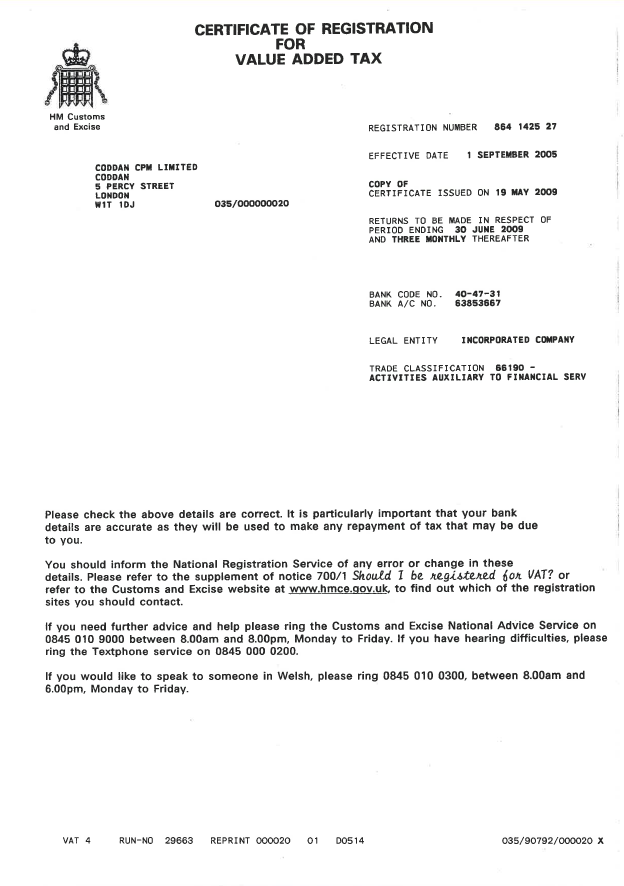
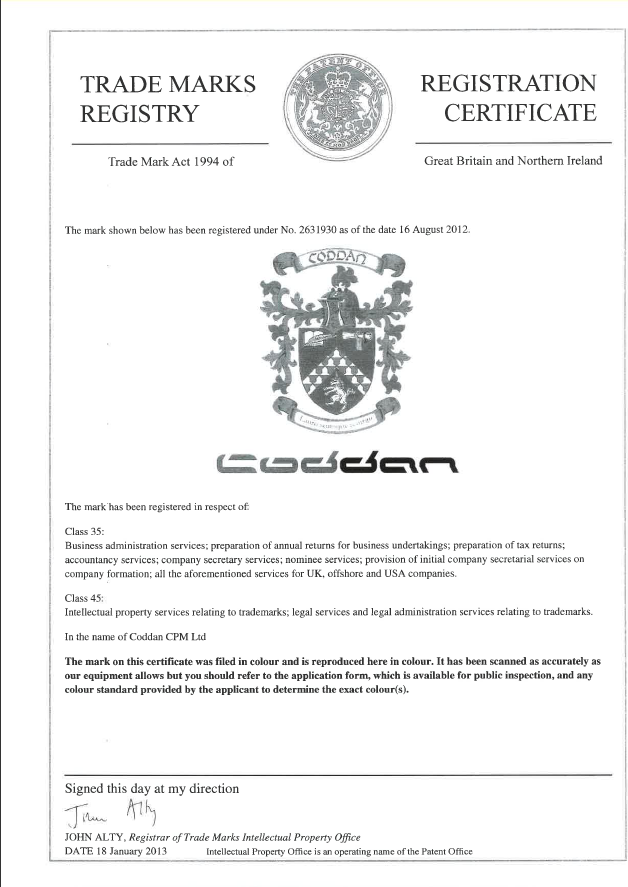
Coddan has provided formation and continuing corporate services since 2005, is supervised by HM Revenue & Customs as a trust or company service provider, and is registered with Companies House as an Authorised Corporate Service Provider. This is not government endorsement or authority to bypass evidence, identity, KYC, consent or professional requirements.
Use the LLP as a holding and ownership entity assessment/written-quotation route where the genuine-business, ownership or professional position needs review. Implementation destination pending
Review UK LLP formation for an accepted UK formation. the two governance and administration packages remain conditional; order/application destinations are pending.
Use LLP agreements and governance or a solicitor for bespoke agreements, trusts, nominees, disputed title, transfers and legal opinions. Implementation destination pending
Route property to LLP as a property-holding or property-investment entity, IP to LLP as an intellectual-property and licensing vehicle and investment/fund issues to restricted LLP for investment, asset-management or fund-related activity. Phase 2 destinations pending
Obtain separately scoped advice or provider decisions for tax, accounts, valuation, lending, banking, insurance, regulation and documentary processing. Professional destinations pending


Coddan CPM LTD™ Business One-Stop Shop since 2005 Doing Business Made Easier!
