We use cookies on this website, you can read about cookies and GDPR Privacy Policy here
Coddan CPM Ltd. – Company Registration Agent in the UK

Follow the journey from understanding your LLP’s annual accounts obligations to selecting the appropriate accounts service, preparing records and coordinating filing.

Step 1
Understand Filing Obligations
Step 2
Identify Accounting Periods
Step 3
Prepare Accounting Records
Step 4
Select Accounts Service
Step 5
Approve and File
Step 6
Address Overdue Accounts
Companies Registry's e-Services Portal LLP & Limited Partnerships Compliant Corporate Formations: LLPs & LPs UK LLP Financial Reporting: Annual Accounts Preparation & Companies House Filing

UK LLP Financial Reporting: Annual Accounts Preparation & Companies House Filing


Start Your Business Today: Fast Formation Services to Meet All Compliance Standards

Ensure your dormant LLP accounts are compliant with our £199 + VAT service. We handle preparation, approval, and filing for a hassle-free experience.

Get your eligible dormant LLP accounts prepared and filed for just £199 + VAT. Trust Coddan for professional service and seamless Companies House filing.
£199.00
+VAT

Dormant Accounts™

Recommended for

1
package

Buy Now No trading does not mean no accounts deadline.
Dormant Accounts — £199 + VAT. Recommended for an eligible dormant LLP whose accounting period, transactions and records support dormant-accounts treatment and whose members can approve the filing. Coddan checks the supplied dormant declaration and records, allocates the accepted preparation responsibility, prepares the accounts and coordinates member approval and Companies House filing. The professional outcome is eligible dormant LLP accounts prepared and filed for one accounting period. The designated members must confirm the dormant facts, approve and sign the accounts; transactions, missing records or tax issues may move the work outside this fixed scope.

The fixed £199 + VAT is Coddan’s professional fee; no Companies House filing fee is recorded for standard LLP accounts. The service covers one accepted accounting period and does not renew automatically. Bookkeeping, tax returns, record reconstruction, overdue periods, restoration, audit and non-dormant accounts are separate. If the LLP traded or had material transactions, compare Micro/Small Accounts or Active Accounts. The preparer retains professional responsibility for the accepted accounts work; Companies House decides filing acceptance.


£495.00
+VAT

Micro/Small Accounts™

Recommended for

2
package

Buy Now Smaller accounts still need complete records and professional preparation.
Micro/Small Accounts — from £495 + VAT. Recommended for an LLP that appears eligible for the applicable micro or small reporting framework and can supply an accepted, complete accounting record for the period. Coddan reviews the records for scoping, allocates a competent preparer and issues a written quotation before the accepted accounts are prepared for member approval and filing. The professional outcome is appropriately scoped LLP accounts prepared under the applicable accepted reporting basis. The designated members must supply the records, answer accounting queries and approve and sign the accounts; eligibility and price cannot be fixed until the records are assessed.

Coddan’s professional fee starts at £495 + VAT and is confirmed after records and reporting requirements are reviewed. The quotation covers one accounting period; later periods require a new or renewed engagement. Bookkeeping cleanup, tax returns, valuations, audit, overdue recovery and complex member balances remain separate unless quoted. A genuinely dormant LLP may use Dormant Accounts. A fuller trading record may require Active Accounts. An allocated accountant or competent preparer owns the accounting conclusions; Companies House controls filing acceptance.


£795.00
+VAT

Active Accounts™

Recommended for

3
package

Buy Now Active trading leaves a fuller accounting trail.
Active Accounts — from £795 + VAT. Recommended for a trading LLP whose sales, costs, assets, liabilities, member balances and accounting records require a fully scoped active-accounts engagement. Coddan organises the initial records review, allocates the accepted preparer and provides a written quotation for preparing the accounts, resolving queries, obtaining member approval and coordinating filing. The professional outcome is active LLP accounts prepared from the accepted records for one defined period. The members must provide complete records and explanations and approve and sign the accounts; incomplete books, tax work and specialist valuations require separate scope.

Coddan’s professional fee starts at £795 + VAT and is confirmed after the activity and records are assessed. The engagement covers one quoted period and does not create automatic renewal. Bookkeeping reconstruction, partnership tax returns, member tax, audit, valuations, payroll and overdue-period recovery are separate unless quoted. Where the LLP qualifies and the records are more limited, compare Micro/Small Accounts. Overdue work uses the Overdue Supplement. The allocated preparer owns the accounting conclusions; designated members approve the accounts and Companies House decides filing acceptance.


£175.00
+VAT

Overdue Supplement™

Recommended for

4
package

Buy Now An overdue period needs recovery work as well as preparation.
Overdue Supplement — from £175 + VAT per overdue period. Recommended for an LLP whose accounts engagement includes one or more overdue periods requiring additional chronology, records checks, deadline recovery and filing coordination. Coddan identifies the overdue periods and missing inputs, coordinates the added preparation work with the allocated accountant and includes the supplement in the written quotation. The professional outcome is a defined recovery scope for each overdue accounting period alongside the underlying accounts service. You must provide the historic records and correspondence promptly; the supplement does not remove penalties, restore a dissolved LLP or guarantee acceptance of late filings.

The additional professional fee starts at £175 + VAT for each overdue period. Companies House penalties and other official or professional charges are separate. The supplement applies per overdue period and only alongside an accepted accounts engagement; it has no renewal. Underlying accounts preparation, bookkeeping reconstruction, tax work, appeals, restoration and audit remain separately priced. Choose the underlying Dormant, Micro/Small or Active Accounts route. A dissolved LLP may also require restoration. Companies House controls penalties and filing acceptance; Coddan and the preparer cannot cancel statutory consequences by submitting the accounts.


Accounts preparation, member approval and Companies House filing

LLP Annual Accounts Preparation and Filing

Place the accounting records, professional preparation, members’ approval, required signature and statutory filing into one clearly defined annual route—without treating Companies House accounts as bookkeeping, tax returns or an audit.

Coddan can prepare and file accepted dormant, micro, small and active LLP accounts through its in-house or external-accountant route. The correct category, fee and professional scope are confirmed from the LLP’s actual period, activity, records and eligibility.

Commercial position: dormant LLP accounts are £199 + VAT per accounting period; eligible micro or small LLP accounts start from £495 + VAT; active LLP accounts start from £795 + VAT. Ordinary Companies House accounts filing currently carries no official filing fee. Late penalties, tax, bookkeeping, audit and other professional work are separate.

Registration is not annual organisation

The LLP must create reliable accounts before it can file them

Every LLP must keep adequate accounting records, whether it is trading or not, and annual accounts must be prepared for each financial year unless a narrow statutory exemption applies. Companies House receives a copy of accounts already prepared and approved; it does not build the figures or approve the commercial and accounting judgments behind them.

Accounting records

Record money received and spent, assets and liabilities, and—where relevant—stock and goods transactions. Bank statements alone are not necessarily a complete ledger or evidential record.

Accounts preparation

Classify the LLP, apply the appropriate accounting framework, reconcile the records, obtain explanations and produce accounts for the members’ consideration.

Approval and signature

The members approve the accounts. The balance sheet is signed on behalf of the members in the manner required for the applicable accounts, with the signer’s printed name and the necessary exemption statements.

Companies House filing

Transmit an acceptable copy through a supported route before the deadline. A software validation or filing acknowledgement does not establish that the underlying figures are correct.

Period first, deadline second

The filing date follows the LLP’s accounting reference period

A new LLP’s financial year begins on incorporation. Its first accounting reference date normally falls on the last day of the month containing the first anniversary of incorporation. Later periods normally end on that annual date unless the accounting reference date is validly changed.

LLP annual accounts filing deadlines
AccountsCurrent filing ruleControl point
Later annual accountsAcceptable accounts must normally reach Companies House within 9 months of the accounting reference date.The deadline is calculated to the exact day; receipt of acceptable accounts matters, not the date sent.
First accounts covering more than 12 monthsThe longer of 21 months from incorporation or 3 months from the accounting reference date.Do not assume that every first period has a standard 9-month deadline.
First accounts covering 12 months or lessThe normal filing period applies.Confirm the exact due date on the Companies House record.
Shortened periodThe longer of 9 months from the new accounting reference date or 3 months from receipt of the change notice.An overdue period cannot be rescued simply by changing the accounting reference date.

If accounts are submitted before the deadline but rejected after it, the LLP can still receive an automatic late-filing penalty. Preparation should therefore begin early enough to allow for queries, approval, signature and any correction before delivery.

Classify the LLP from the period and evidence—not from the package name

The LLP’s accounts route depends on actual transactions, current size tests, exclusions, group circumstances, audit requirements and the quality of the available records. An overseas member does not automatically alter the size classification.

Dormant LLP: absence of significant accounting transactions

For Companies House purposes, an LLP is dormant where it has had no significant accounting transaction during the accounting period. “No sales”, “no profit” or “not trading” is not enough on its own: bank activity, assets, liabilities, member transactions, professional charges and other entries may require examination.

The current statutory test disregards specified registrar fees—such as confirmation-statement or name-change fees—and civil penalties for late accounts. Other activity is not disregarded merely because it is small.

Boundary: Companies House dormancy, HMRC partnership treatment and any corporate member’s tax position are separate questions. Dormant accounts still have the ordinary filing deadline and late-penalty regime.

For accounting periods beginning on or after 6 April 2025 — at least two of the three conditions must be met
CategoryTurnoverBalance-sheet totalAverage employeesFurther control
Micro-entity LLPNot more than £1 millionNot more than £500,000Not more than 10Eligibility, exclusions and the two-year rules must still be checked.
Small LLPNot more than £15 millionNot more than £7.5 millionNot more than 50Regulated activities, securities and an ineligible group can prevent use of the regime.

Micro-entity accounts

A qualifying LLP prepares the accounts required by the micro-entity provisions. Reduced public filing does not remove the need for adequate underlying records, complete accounts for members or the required approval and statements.

Micro status is not assumed merely because the LLP is new, owner-managed or has few transactions.

Small LLP accounts

A qualifying small LLP can use the current statutory disclosure and audit-exemption provisions. The accounts prepared for members, the copy filed and any abridgement decision must satisfy the rules applicable to the period.

Accounts reforms announced for filings from 1 April 2028 are future requirements, not the present filing position.

Active, medium or large LLP

An active LLP’s route depends on its size, activity, group position, disclosures, accounting judgments and audit position. The £795 + VAT price is a starting point for an accepted ordinary active case—not a universal fixed fee.

Medium, large, regulated, group or otherwise complex work requires individual scope and quotation.

Evidence follows the LLP’s actual activity

The accounts can only be as reliable as the records and explanations supplied

Coddan uses a category-specific records request. A dormant LLP is not asked for an active trading ledger without reason, while an active or overdue LLP cannot bypass missing evidence by selecting a filing package.

Books and transactions

Prior accounts, trial balance, nominal ledger, bookkeeping data, sales, purchases, invoices, receipts, expenses and year-end adjustments.

Money and liabilities

Business bank and payment-provider statements, loans, finance, creditors, debtors, accruals, prepayments, assets and depreciation information.

Members and economics

Capital contributions, members’ capital accounts, profit and loss allocation, drawings, benefits, remuneration and balances due to or from members.

Connected records

Payroll, pensions, VAT records and returns, related-party transactions, previous filings and relevant Companies House or HMRC correspondence.

Agreement and decisions

The LLP agreement and amendments where economic arrangements affect the figures, together with relevant member decisions and professional conclusions already obtained.

International evidence

Overseas transactions, foreign-currency records, corporate-member information, translated material and any foreign-law or international-tax conclusions required from another professional.

The precise list depends on the period, activity, category and record quality. Events after the reporting date and the basis for any dormant claim may also require written confirmation.

Preparation may be delegated; approval and statutory responsibility are not erased

Coddan’s in-house accountant or an accepted external accountancy firm may prepare the accounts. The engagement identifies the allocated professional route, scope and filing responsibility. The you supplies the evidence; the members approve; and the balance sheet is signed on behalf of the members as the applicable accounts requirements prescribe.

LLP annual accounts responsibility allocation
Stageyou and membersDesignated memberCoddan or allocated accountantCompanies House
Records and answersSupply complete, accurate records and explanations.Ensure the statutory record and accounts duties are addressed.Request, assess and query the evidence within scope.Does not create the source records.
PreparationConfirm the supplied facts and respond to queries.Oversee compliance; delegation does not remove statutory responsibility.Prepare and review within the accepted professional engagement.Does not prepare or professionally review the figures.
ApprovalThe LLP’s members approve the accounts.Ensure approval is obtained before filing.Provide the prepared accounts and explain unresolved points; does not manufacture approval.Filing acceptance is not member approval.
SignatureAuthorise the proper member to sign on behalf of the members.Small and dormant formats require the applicable designated-member signature and statements; other accounts follow the signature rule applying to their format.Check that the required signature, printed name and statements are present; does not sign for the members.May reject accounts that do not meet signature and presentation requirements.
FilingGive informed authority to file the approved accounts.Remain responsible for delivery within the statutory period.Transmit the approved copy through the accepted route and handle an agreed rejection response.Receives, examines and accepts or rejects the filing for the register.
Error or correctionDisclose the error and provide corrected evidence and approval.Ensure the appropriate corrective route is considered.Assess whether amended accounts, a correction filing or professional escalation is required.Applies the statutory filing and correction framework.

Audit recognition, not audit by implication

Size is only one part of the audit-exemption decision

For periods beginning on or after 6 April 2025, the principal size test for small-LLP audit exemption uses the £15 million turnover, £7.5 million balance-sheet and 50-employee thresholds, with at least two met. The LLP must also satisfy the wider eligibility rules and include the required statements.

Size and eligibility

Confirm the relevant period, two-of-three test, group position, regulated activity, traded securities and other statutory exclusions.

Other audit triggers

Member rights, group arrangements, contractual terms, regulation or another applicable requirement may require an audit even where the LLP appears small.

Registered-auditor referral

Where a statutory audit is required, the work is referred to an appropriately registered audit firm that accepts the engagement and professional responsibility.

Coddan’s accounts-preparation fee does not include a statutory audit unless a written quotation expressly records the responsible audit firm, scope and fee.

One accounting period per engagement

Choose the package only after the accounts category is supported

The fee covers one accepted accounting period. The following period requires a new annual instruction or engagement. No Companies House official fee currently applies to the ordinary accounts filing itself.

Conditional annual application

Dormant LLP Accounts

£199 + VAT / accounting period

  • status and transaction review within the accepted scope;
  • preparation of qualifying dormant LLP accounts;
  • member approval and signature stage;
  • ordinary Companies House filing; and
  • filing outcome record.

Official fee: £0 under the current ordinary filing route.

Separate: activity analysis beyond scope, bookkeeping, prior periods, corrections, tax, late penalties and restoration.

Assessment before acceptance

Micro or Small LLP Accounts

From £495 + VAT / accounting period

  • current eligibility and exclusion review;
  • preparation from complete, orderly records;
  • applicable statements and disclosures;
  • approval and signature stage; and
  • ordinary Companies House filing.

Official fee: £0 under the current ordinary filing route.

Separate: cleanup, reconstruction, tax returns, VAT, PAYE, audit, corrections and complex member arrangements.

Assessment and confirmed quotation

Active LLP Accounts

From £795 + VAT / accounting period

  • classification and engagement scoping;
  • preparation from accepted records;
  • professional queries and agreed review;
  • approval and signature stage; and
  • ordinary Companies House filing where included.

Official fee: £0 under the current ordinary filing route.

Price depends on: activity, volume, records, members, group position, disclosures and professional dependencies.

Overdue, multi-period, reconstruction, medium, large, group or audit-related accounts

These cases require individual assessment and quotation. The quotation separates accounts preparation from record reconstruction, amended or corrective work, tax, audit, penalties and external-professional costs.

No instant checkout and no invented fixed fee. Acceptance, scope and timing depend on complete evidence, responsible professional availability and the statutory position.

LLP accounts commercial continuity
Commercial elementCurrent LLP annual accounts position
Coddan professional fee£199 dormant; from £495 micro/small; from £795 active; complex work quoted.
VATAdded to the Coddan professional fee at the applicable rate.
Companies House feeNo official fee for ordinary annual-accounts filing under the current route.
Period coveredOne accepted accounting period unless the written quotation expressly includes more.
Next periodA new annual instruction or engagement is required; the following year is not included automatically.
Additional workBookkeeping, reconstruction, corrections, tax, VAT, PAYE, audit, penalties, legal, insolvency, restoration and international professional conclusions are separately scoped.

Late filing is a condition to manage, not a package label

Overdue accounts may expose several connected problems

An overdue LLP may need more than submission of a set of figures. Coddan first identifies the missing periods, record condition, current Companies House status, penalties and any tax, strike-off, restoration or insolvency dependency.

Current automatic late-filing penalties for a private company or LLP
How late acceptable accounts arrivePenalty
Not more than 1 month£150
More than 1 month but not more than 3 months£375
More than 3 months but not more than 6 months£750
More than 6 months£1,500

The late-filing penalty doubles when accounts are filed late in two successive financial years. It is imposed on the LLP and is separate from possible criminal proceedings against designated members for failure to file.

Records and periods

Identify every unfiled period, reconstruct only where separately accepted and avoid treating one filing as a cure for all historical obligations.

Register and enforcement

Check overdue status, rejection history, strike-off action, dissolution and any need for restoration before promising a filing route.

Professional dependencies

Separate tax arrears, insolvency indicators, disputed member balances, audit requirements and legal problems for the responsible professional.

An overseas member changes the evidence and advice route—not automatically the accounts category

An LLP with non-UK individual or corporate members can still be assessed for dormant, micro, small or active treatment under the applicable rules. Complexity arises where the records, transactions, ownership, currency or professional conclusions cross jurisdictions.

Records and currency

Foreign bank records, transactions, invoices, corporate-member balances and currency conversion require an agreed evidential and accounting basis.

Member treatment

Individual and corporate members can have different reporting and tax consequences. A Companies House accounts engagement does not determine each member’s tax liability.

Foreign-law and tax referral

Permanent-establishment, withholding, double-taxation, foreign-law or overseas reporting conclusions remain with an appropriately responsible adviser.

Accounts prepared in a language other than English generally require a certified English translation when delivered to Companies House, subject to the specific Welsh and voluntary-translation rules. Translation or certification is a separate documentary service.

Professional review and lifecycle continuity

A filing route built around preparation, approval and evidence

  1. 1. Initial classification. Confirm the period, filing date, activity, claimed category, prior filings, group or audit issues and the condition of the records.

  2. 2. Engagement and scope. Identify the contracting entity, allocated in-house or external-accountant route, professional fee, inclusions, exclusions and any separate work.

  3. 3. Records and queries. Collect the category-specific evidence, reconcile the available records and send focused questions where facts or balances need explanation.

  4. 4. Preparation and review. Prepare the agreed accounts, apply the relevant framework and disclosures, and identify any issue requiring tax, audit, legal or insolvency referral.

  5. 5. Member approval and signature. Provide the accounts for approval and obtain the required signature, printed name, representations and filing authority. Coddan does not approve or sign for the members.

  6. 6. Filing and outcome. Deliver the approved copy through the accepted Companies House route and record acceptance, rejection or the next corrective step.

The processing window is confirmed after the initial review. It starts only when Coddan has accepted the engagement and received complete records, explanations and required authority. No same-day preparation or Companies House acceptance promise is made.

Clarity proved through the annual route

Separate the records, accounts, tax and audit before work begins

The administrative burden grows when every financial task is described as “doing the accounts”. Coddan’s route identifies the period, category, records, professional responsibility and connected services before the filing stage.

Relevant records list

A category-specific request reduces unnecessary repetition while preserving the evidence needed for reliable preparation.

Defined responsibilities

The you, members, designated members, preparer and Companies House each have a visible function and boundary.

Defined next step

Bookkeeping, tax, audit, correction, insolvency or restoration is routed separately instead of being hidden inside an unsuitable accounts package.

This makes the administration clearer and more straightforward. It does not describe accounting judgments, dormant status, overdue recovery or audit eligibility as simple, easy or guaranteed.

When Coddan pauses, quotes separately or refers the work

The service is accepted only where the evidence, responsibility and professional scope are clear enough for proper preparation and filing.

Separate quotation

  • incomplete or disorganised bookkeeping;
  • multi-period reconstruction or amendments;
  • complex member balances or related parties;
  • group, overseas or foreign-currency work; and
  • medium, large or unusual disclosure requirements.

Professional referral

  • statutory audit;
  • individual, corporate or international tax conclusions;
  • disputed LLP-agreement interpretation;
  • insolvency or inability to meet liabilities; and
  • legal disputes, fraud concerns or foreign-law questions.

Pause or refusal

  • materially inconsistent or withheld records;
  • unsupported dormant classification;
  • unclear authority, approval or member allocations;
  • a request to omit, alter or conceal a material fact; and
  • work outside the responsible professional’s competence or risk boundary.

Keep every connected job with its proper owner

Accounts may expose a governance, filing, tax or solvency issue. LLP annual accounts identifies the connection without taking ownership of the separate professional service.

UK LLP formation

For a new LLP’s incorporation and package selection—not annual accounts.

Review UK LLP formation

International formation

For overseas formation evidence, ownership chains, CDD and EDD.

Use the international LLP route

Members and PSCs

For the separate role, designated-status, corporate-member and control analysis owned by LLP members, designated members, corporate members and PSCs.

Agreement and governance

For drafting or changing the capital, profit, voting and member arrangements owned by LLP agreements and governance.

Addresses and records

For registered office, member service addresses and accepted records-location subscriptions owned by Registered office, service addresses and LLP records.

Confirmation and compliance

For the confirmation statement and managed continuing filing calendar owned by LLP confirmation statements and continuing compliance.

Review LLP continuing compliance

Member or PSC changes

For actual member, designated-status, corporate-member or PSC change filings owned by Change members, designated status and PSC details.

Dissolution or restoration

For an eligible voluntary closure through Close an LLP voluntarily or a dissolved LLP’s restoration route through Restore a dissolved LLP.

Tax, bookkeeping, audit and insolvency

Separate specialist referrals for the responsible accountant, tax adviser, registered auditor or insolvency practitioner.

Capability evidenced by the engagement

Accounts work connected to Coddan’s wider LLP lifecycle

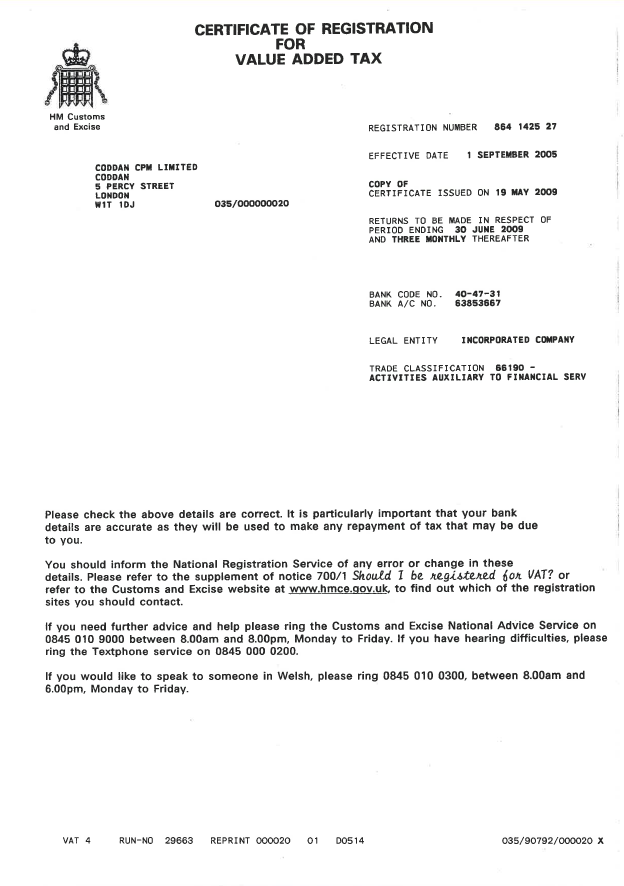
Coddan has provided formation and continuing corporate services since 2005. It operates as a formation agent, is supervised by HM Revenue & Customs as a trust or company service provider, and is registered with Companies House as an Authorised Corporate Service Provider.

Coddan has access to an in-house accountant and works with external accountancy firms. The accepted engagement identifies which route performs the work. These facts do not represent government endorsement, HMRC approval of the accounts, registered-auditor status or authority to give legal or individual tax advice.

Defined professional scope

The engagement identifies the period, category, preparer route, evidence, inclusions, exclusions, price and filing responsibility.

Preparation before transmission

Software is used to transmit accepted accounts efficiently; it does not replace record review, professional preparation, member approval or signature.

Responsible referral

Audit, tax, legal, insolvency or foreign-law conclusions move to the professional who accepts that engagement and responsibility.

Authoritative accounting and filing basis

The statutory, threshold, filing and penalty statements on this page were checked against the position available on 23 September 2026. Eligibility and the required accounts format must be tested for the particular accounting period.

Start with the accounting period and records

Select the supported annual route—or request an accounts assessment

Use the dormant application only where the period appears to contain no significant accounting transactions. Micro, small and active accounts proceed after records and eligibility assessment. Overdue, complex, audit-related and multi-period work requires individual scope.

Apply for dormant LLP accounts Request a micro or small assessment Request active or complex scope

Acceptance depends on complete records, the applicable accounts category, member approval, professional availability and Coddan’s risk and competence boundaries. Filing cannot be guaranteed to remove penalties, prevent enforcement or determine a tax outcome.