 Send us an e-mail








A genuine enterprise
At least two intended members will carry on a lawful collaborative business with a view to profit.













 9.30 am – 6.00 pm GMT
 Monday-Friday
 info@coddan.co.uk








£189.00+VATLLPStartup Essential™ Recommended for 1
package
Buy Now LLP Registration – LLP as an R&D and Innovation Collaboration for £89 + VAT. The fixed £89 + VAT price is Coddan’s professional fee for the scope stated above and VAT is added to that fee. Companies House fees are separate: £100 standard software, £156 same-day or £124 paper; paper also requires separately agreed Coddan work. The price assumes two straightforward UK individual members; each additional UK individual is £35 + VAT, each accepted UK body-corporate member is £125 + VAT, and later admissions are separate. This is a one-off service with no automatic renewal. Incorporation does not create the collaboration agreement or transfer data, equipment, materials, software, know-how, background IP or project-generated IP. Need initial records? Compare Registration & Initial Records. Review the full formation terms and compare LLP and company structures. Overseas or complex cases use international LLP formation. LLP Registration and Registration & Initial Records may proceed only for a settled eligible case. Governance Setup and First-Year Administration require a questionnaire and human acceptance. Companies House—not Coddan—decides whether the incorporation or later filing is accepted. |
£249.00+VATLLP Startup Records™ Recommended for 2
package
Buy Now Registration & Initial Records – LLP as an R&D and Innovation Collaboration for £149 + VAT. The fixed £149 + VAT price is Coddan’s professional fee for the scope stated above and VAT is added to that fee. Companies House fees are separate: £100 standard software, £156 same-day or £124 paper; paper also requires separately agreed Coddan work. The price assumes two straightforward UK individual members; each additional UK individual is £35 + VAT, each accepted UK body-corporate member is £125 + VAT, and later admissions are separate. This is a one-off service with no automatic renewal. Incorporation does not create the collaboration agreement or transfer data, equipment, materials, software, know-how, background IP or project-generated IP. Need formation only? Compare LLP Registration. Need governance? Compare Governance Setup. Review the full formation terms and see later member and PSC changes. Overseas or complex cases use international LLP formation. LLP Registration and Registration & Initial Records may proceed only for a settled eligible case. Governance Setup and First-Year Administration require a questionnaire and human acceptance. Companies House—not Coddan—decides whether the incorporation or later filing is accepted. |
£379.00+VATLLP Governance Essential™ Recommended for 3
package
Buy Now Governance Setup – LLP as an R&D and Innovation Collaboration for £279 + VAT. The fixed £279 + VAT price is Coddan’s professional fee for the scope stated above and VAT is added to that fee. Companies House fees are separate: £100 standard software, £156 same-day or £124 paper; paper also requires separately agreed Coddan work. The price assumes two straightforward UK individual members; each additional UK individual is £35 + VAT, each accepted UK body-corporate member is £125 + VAT, and later admissions are separate. This is a one-off service with no automatic renewal. Research, collaboration, confidentiality, data, material-transfer, publication, funding, assignment, licence and commercialisation documents are not included. Need no agreement? Compare Registration & Initial Records. Need first-year support? Compare First-Year Administration. Review the full formation terms and read about LLP governance. Overseas or complex cases use international LLP formation. LLP Registration and Registration & Initial Records may proceed only for a settled eligible case. Governance Setup and First-Year Administration require a questionnaire and human acceptance. Companies House—not Coddan—decides whether the incorporation or later filing is accepted. |
£549.00+VATLLP First-Year Essential™ Recommended for 4
package
Buy Now First-Year Administration – LLP as an R&D and Innovation Collaboration for £449 + VAT. The fixed £449 + VAT price is Coddan’s professional fee for the scope stated above and VAT is added to that fee. Companies House fees are separate: £100 standard software, £156 same-day or £124 paper; paper also requires separately agreed Coddan work. The £50 digital confirmation-statement fee is separate. The price assumes two straightforward UK individual members; each additional UK individual is £35 + VAT, each accepted UK body-corporate member is £125 + VAT, and later admissions are separate. The scope ends with the first confirmation statement; later administration requires affirmative renewal. Grant compliance, ethics, data protection, regulatory approvals, R&D tax relief, accounting and commercialisation remain separate. Need no first-year support? Compare Governance Setup. Review the full formation terms and review LLP accounts and continuing compliance. Overseas or complex cases use international LLP formation. LLP Registration and Registration & Initial Records may proceed only for a settled eligible case. Governance Setup and First-Year Administration require a questionnaire and human acceptance. Companies House—not Coddan—decides whether the incorporation or later filing is accepted. |
LLP formation for a defined business purpose
Test whether an LLP fits the collaboration, identify participants, contributions, existing rights, expected outputs, funding and professional dependencies, and separate incorporation from the work needed to make the research enterprise operational.
This route is for founders, businesses, researchers, technical specialists, universities, research institutions, funders or investors considering an LLP for a defined R&D or innovation enterprise. The correct destination depends on what the participants will do together—not on whether the proposal is labelled “research,” “innovation,” “consortium” or “joint venture.”
At least two intended members will carry on a lawful collaborative business with a view to profit.
The purpose, programme, workstreams, contributions, milestones and commercialisation model can be explained.
Background rights, expected outputs, creators, owners and required permissions can be identified.
Research, IP, grant, data, ethics, tax and regulatory work is not treated as part of incorporation.
The first job is to establish what problem is being addressed, what programme will be undertaken, who contributes what, how value is expected to be created or exploited, who controls decisions and what happens to outputs. Incorporation is not a substitute for a coherent enterprise.
Organisation before instrument: an LLP can be legally incorporated even when it is commercially unsuitable. The organisational decision must come before the formation package.
LLP as an R&D and innovation collaboration recognises the R&D-specific job. Compare an LLP with a private limited company provides the complete LLP-versus-company and alternative-structure comparison.
| Structure | What it organises | Central distinction | Typical dependency | Destination |
|---|---|---|---|---|
| LLP collaboration | Separate member-owned R&D business. | Members, not shareholders; formation does not allocate outputs. | Governance, IP, funding and implementation. | LLP as an R&D and innovation collaboration plus UK LLP formation/International and non-UK LLP formation. |
| Contractual consortium | Cooperation without a new body. | The people or organisations involved retain their legal identities. | Bespoke consortium agreement. | Solicitor/LLP agreements and governance separate route. |
| Company JV | Share-based jointly owned entity. | Shares, directors and company distributions. | Company/JV/legal/tax work. | Compare an LLP with a private limited company comparison. |
| Commissioned research | Customer engages a provider. | Payment does not itself decide IP ownership. | Research-services/IP contract. | Legal/IP professional. |
| Informal cooperation | Early discussion or shared activity. | Authority, liability and ownership may be unclear. | Professional structure review. | Assessment separate route. |
| Ordinary collaboration | Continuing small-business activity. | No dominant R&D programme or institutional layer. | Ordinary business governance. | LLP as a small-business collaboration pending destination. |
The LLP must have members and at least two designated members. A member may act as the LLP’s agent in its business, so authority to spend, disclose, publish, license or appoint must be clearly defined. PSC status depends on statutory rights and influence—not authorship, technical contribution, funding or title.
| you | Possible contribution | Authority evidence | Ownership/control question | Separate issue |
|---|---|---|---|---|
| Founder/member | Cash, work, know-how, rights. | Identity and settled instructions. | Member rights and PSC tests. | Creator/title evidence. |
| Company | Funding, personnel, IP, facilities. | Board/entity authority. | Ownership chain and corporate member. | International and non-UK LLP formation/corporate evidence. |
| University/institution | Researchers, facilities, background IP. | Institutional approval. | Institutional ownership/funder rights. | Collaboration and grant terms. |
| Researcher/employee | Creative or inventive work. | Employment/appointment terms. | Creator and first-owner rules. | Employment/IP advice. |
| Contractor | Services and deliverables. | Executed contract. | Payment does not equal assignment. | Status and IP instrument. |
| Funder/investor | Grant, loan or capital. | Award/investment authority. | Control, security and conditions. | Funding/regulatory advice. |
Current formation requires every LLP member to verify identity and provide the Companies House personal code. Verification does not prove authority, contribution, ownership or PSC status. LLP members, designated members, corporate members and PSCs provides the complete roles/PSC explanation; its link remains pending.
Identify the technical and commercial purpose, workstreams, locations, duration, milestones, review points, completion criteria and intended exploitation. Then map cash, people, premises, equipment, materials, data, software, know-how, background rights, facilities and services.
For each contribution, record the present owner, whether it will be transferred, licensed, hired, loaned or merely made available, the restrictions and consents, and the completion evidence. A contribution schedule does not itself move title.
Background IP is pre-existing or independently clearly defined material brought to the project. Project-generated or foreground IP is produced during the work. Neither category moves automatically to the LLP. Creator, first-owner, employer, contractor, university, funder and applicable-law questions must be examined.
| Question | Background IP | Project-generated IP | Formation consequence |
|---|---|---|---|
| Current owner | Existing chain of title. | Depends on creator, employment and contract. | Do not infer LLP ownership. |
| Project access | Permission/licence may be needed. | Creation and access terms required. | Instrument remains separate. |
| Exploitation | Owner may reserve commercial rights. | Allocation/licence must be agreed. | Professional drafting. |
| Restrictions | Security, third-party, funder, territory. | Publication, grant and contributor rights. | Clear before acceptance. |
| Arrangement | What it does | What incorporation does not do | Evidence | Owner |
|---|---|---|---|---|
| Ownership | Holds legal title. | Prove or transfer title. | Creation and transaction chain. | IP professional. |
| Assignment | Transfers specified title. | Create the instrument. | Effective signed document. | IP solicitor/agent. |
| Licence | Authorises defined use. | Set scope, term or payment. | Executed terms. | IP/legal professional. |
| Project permission | Allows limited project use. | Create exploitation rights. | Collaboration terms. | Solicitor/institution. |
| Consent/recordal | Manages restriction or records change. | Replace underlying transaction. | Consent, instrument, register. | Right-specific professional. |
Improvements, derivatives, data, source code, laboratory records, negative results, protocols, trade secrets and tacit know-how may require different controls. LLP as an intellectual-property and licensing vehicle provides the complete IP-holding/licensing route and remains a separate specialist guide.
Grant and institutional terms may control eligible organisations, start dates, costs, subcontracting, IP, publication, audit and recovery. Research data may require lawful bases, role allocation, security and international-transfer controls. Clinical, scientific, environmental, product or clearly defined-material work may require approvals, ethics review, insurance or licensed persons.
| Dependency | Question before acceptance | Evidence | LLP as an R&D and innovation collaboration role | Professional destination |
|---|---|---|---|---|
| Grant/funder | Does the vehicle and timing comply? | Award/call/terms. | Recognise blocker. | Funder/grant professional. |
| University | Who may commit facilities, staff and IP? | Institutional approval. | Evidence gate. | Institution/solicitor. |
| Data | What data, roles, basis and transfers? | Data map/assessment. | Identify dependency. | Data professional. |
| Ethics/regulation | Is approval required before work? | Approval/advice/licence. | Pause if material. | Regulator/ethics professional. |
| Materials/facilities | Who covers, controls and bears risk? | Transfer/access/safety terms. | Separate implementation. | Legal/technical owner. |
| Investor/lender | Does funding require shares, security or controls? | Term sheet/clearance. | Route, not advise. | Finance/legal/regulatory. |
HMRC states that the principal R&D relief is for companies chargeable to UK Corporation Tax. Special rules may affect calculation of profit attributable to a corporate member of a partnership, but this is a separate, fact-specific tax-adviser question. LLP as an R&D and innovation collaboration does not promise LLP-level eligibility, a payable credit or that any expenditure qualifies.
Without an effective agreement, statutory defaults may apply: equal sharing of capital and profits, participation in management, no remuneration merely for acting in the business, all-member consent for a new member, majority decisions for ordinary matters and unanimity to change the nature of the business. They do not allocate research outputs, publication rights, funding duties, data, milestones, default or commercialisation.
LLP agreements and governance and solicitors own bespoke or negotiated LLP and collaboration agreements, disputed rights, enforceability and legal opinions. The LLP agreements and governance link remains a separate specialist assistance.
Governance Setup or First-Year Administration can use an approved standard or adapted LLP agreement only if every condition passes and Coddan accepts the case.
| Matter | Standard scope may fit only when | Bespoke trigger | Destination |
|---|---|---|---|
| Internal governance | Settled approved clauses. | Negotiation/non-standard rights. | LLP agreements and governance/solicitor. |
| Research programme | Outside the LLP agreement. | Work packages/milestones/liability. | Collaboration solicitor. |
| IP | No instrument required in formation. | Assignment/licence/ownership terms. | IP professional. |
| Funding/grant | Restrictions already cleared. | Award/investment obligations. | Funder/legal adviser. |
| Data/materials | No specialist document in scope. | Sharing, transfer, ethics or safety. | Data/legal/regulatory. |
| Deadlock/exit | Approved ordinary terms suffice. | Options, vesting, compulsory transfer. | Solicitor/LLP as a joint-venture entity. |
| Evidence | What it establishes | Formation use | Missing/uncertain consequence | Dependency |
|---|---|---|---|---|
| you authority | Who may instruct and commit. | Member/KYC acceptance. | Pause/refuse. | Corporate/legal. |
| Project plan | Purpose, work and commercial model. | Suitability/classification. | No credible business route. | you/technical adviser. |
| IP/output schedule | Rights, owners, users, territories. | Instrument/referral map. | Assessment and written quotation. | IP professional. |
| Creator contracts | Employment/contract and title. | Ownership boundary. | Professional clearance. | Employment/IP legal. |
| Funding terms | Eligibility, timing and restrictions. | Blocker check. | Do not form as assumed. | Funder/grant adviser. |
| Data/ethics approval | Permitted project conduct. | Clearance gate. | Pause/referral. | Data/ethics/regulatory. |
| Tax/accounting advice | Treatment and records. | Separate dependency. | No tax promise. | Accountant/tax adviser. |
A narrow route for a settled, straightforward UK collaboration with no transfer in formation and every IP, funding, data, ethics, regulatory and professional blocker cleared or separately acknowledged.
Required for corporate/overseas or institutional parties, existing asset/IP/data movements, negotiated rights, grants, regulated research, personal data, foreign law, tax-driven choices or professional clearance.
Assessment and written quotation requires assessment and written quotation through a destination that remains pending. Coddan will not invent a product, price or checkout route, and will not force the case into an UK LLP formation package.
Companies House acceptance confirms incorporation only. It does not confirm research viability, IP ownership, funding compliance, tax eligibility, ethics approval or regulatory permission.
| Stage | Required work | Completion evidence | Owner |
|---|---|---|---|
| Formation | Register accepted LLP particulars. | Certificate/filing outcome. | UK LLP formation/International and non-UK LLP formation. |
| Governance | Member authority and decisions. | Agreement/resolutions. | LLP agreements and governance/Coddan within scope. |
| Research agreement | Work, milestones, liability and termination. | Executed agreement. | Solicitor/institutions. |
| IP/publication | Title, licences, confidentiality and publication. | Instruments/registers/protocol. | IP/legal professional. |
| Funding/data/materials | Conditions, access, transfers, controls. | Approvals/contracts/records. | Funder/data/regulatory. |
| Operations | Bank, people, insurance, facilities and systems. | Provider/operational records. | you/providers. |
| Compliance | Accounts, tax, grants, filings and changes. | Accounts/advice/filing records. | LLP annual accounts/LLP confirmation statements and continuing compliance/professionals. |
Use LLP annual accounts for annual accounts and LLP confirmation statements and continuing compliance for confirmation statements and the continuing filing calendar. Grant, regulatory, data and IP maintenance remains separate.
UK LLP formation remains the sole guide containing the complete package terms. LLP as an R&D and innovation collaboration explains eligibility only. Review the clearly defined UK LLP formation formation destination.
| Package | Price | LLP as an R&D and innovation collaboration relevance | Acceptance gate | Not included |
|---|---|---|---|---|
| LLP Registration | £89 + VAT | Cleared straightforward-case formation. | Ordinary UK LLP formation/KYC eligibility. | Agreement or research work. |
| Registration & Initial Records | £149 + VAT | Same case plus approved records. | Ordinary UK LLP formation/KYC eligibility. | Collaboration/IP instrument. |
| Governance Setup | £279 + VAT | Settled internal governance only. | Questionnaire, all 15 conditions and human acceptance. | Research, IP, grant or bespoke terms. |
| First-Year Administration | £449 + VAT | Conditional formation plus defined first-year scope. | Questionnaire, all 15 conditions and human acceptance. | Unlimited work or automatic renewal. |
Standard eligibility assumes two people. An additional straightforward UK individual member is £35 + VAT; an accepted UK body-corporate-member supplement is £125 + VAT. Companies House fees are separate: £100 software, £156 same-day software where available and £124 paper. VAT, identity verification, addresses, documents and professional costs remain separate. The digital confirmation-statement fee is £50. Later renewal requires affirmative acceptance.
| Matter | LLP as an R&D and innovation collaboration role | Silo owner | Professional owner | Treatment |
|---|---|---|---|---|
| Structure | R&D-purpose diagnosis. | Compare an LLP with a private limited company full comparison. | Legal/tax adviser. | Explain and route. |
| Formation | Readiness/package placement. | UK LLP formation; International and non-UK LLP formation international. | Companies House. | Accepted filing only. |
| Roles/PSC | Recognise dependency. | LLP members, designated members, corporate members and PSCs. | Legal/identity ecosystem. | Separate route. |
| Agreements/IP | Fit/evidence recognition. | LLP agreements and governance/LLP as an intellectual-property and licensing vehicle. | Solicitor/IP professional. | Separate work. |
| Grant/data/regulation | Identify blocker. | specialist referrals. | Funder/data/ethics/regulator. | Clear before acceptance. |
| Tax/accounts | State boundary. | LLP annual accounts/LLP confirmation statements and continuing compliance lifecycle. | Accountant/tax adviser. | No relief conclusion. |
Written quotations separate Coddan, VAT, official, professional and third-party costs.
Registration does not implement research, ownership, funding, data, approvals or operations.
Forms cannot decide science, title, relief, grants, ethics, regulation or enforceability.
Accounts, filings, member/PSC changes and project-specific duties continue after formation.
A project schedule, contribution map, background/foreground distinction, dependency checklist, suitability check, separated costs and recorded filing outcome make administration clearer. They do not make specialist work instant or guaranteed.
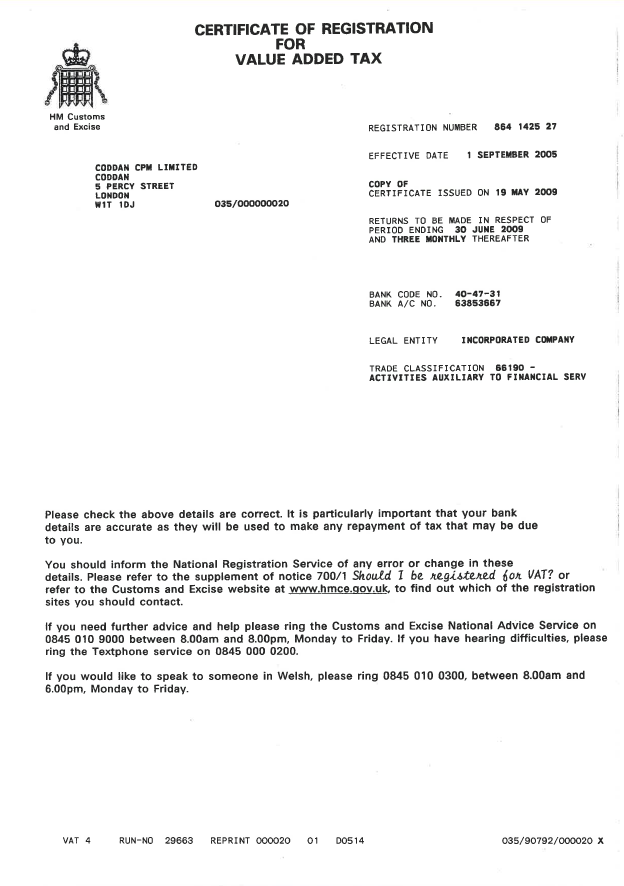
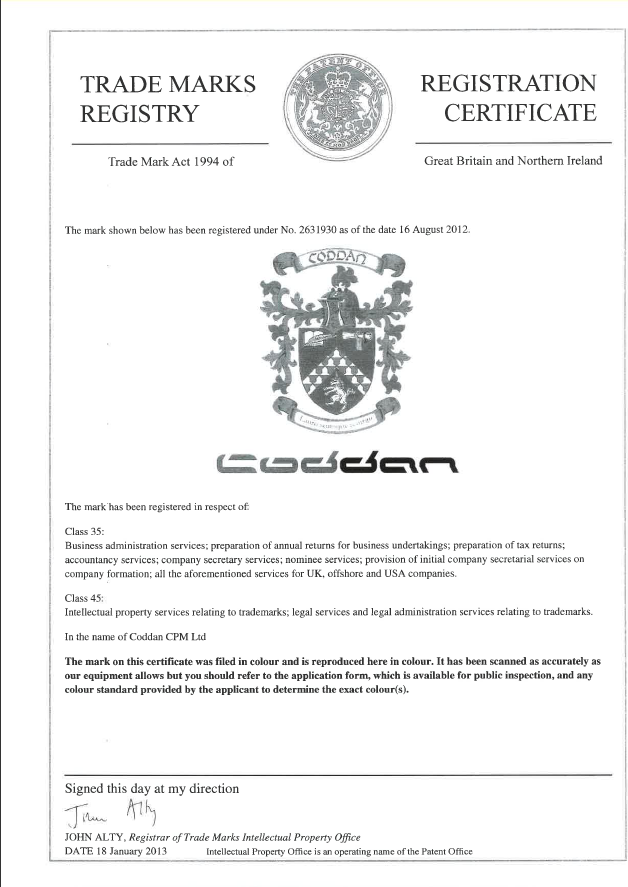
Coddan has provided formation and continuing corporate services since 2005, is supervised by HM Revenue & Customs as a trust or company service provider, and is registered with Companies House as an Authorised Corporate Service Provider. This is not government, HMRC, UKIPO, UKRI or regulator endorsement.
No material conflict requires a pause pending evidence. Compare an LLP with a private limited company, UK LLP formation, International and non-UK LLP formation, LLP annual accounts and LLP confirmation statements and continuing compliance were confirmed live. LLP members, designated members, corporate members and PSCs–Registered office, service addresses and LLP records, the LLP as an R&D and innovation collaboration public guide, related Phase 2 pages, order/application, quotation and professional destinations are arranged separately where required.
Use the assessment and written-quotation route for funding, IP, data, institutional, tax or regulatory review. Destination pending
Review UK LLP formation for an accepted UK formation. Order and conditional-application destinations remain pending.
Use LLP agreements and governance, LLP as an intellectual-property and licensing vehicle, an IP professional or solicitor for collaboration terms, title, assignments, licences, confidentiality, publication and commercialisation. Destinations pending
Use tax/accounting, grant, data, ethics, regulatory, banking, insurance, foreign-law or documentary professionals as required. Professional destinations pending
Use LLP as a joint-venture entity for a general JV, LLP as a small-business collaboration for an ordinary collaboration, restricted LLP for investment, asset-management or fund-related activity for investment/funds, LLP as an intellectual-property and licensing vehicle for an IP vehicle or LLP for e-commerce and online-marketplace trading for marketplace trading. Phase 2 destinations pending


Coddan CPM LTD™ Business One-Stop Shop since 2005 Doing Business Made Easier!
